 Established in 1983, BCT Gin Company, Inc. handles cotton, peanuts, corn, and small grains with operations in Quitman, Berlin, Pavo, Adel, and Moultrie.
The shareholders and Board of Directors knew this company needed managers who were knowledgeable in farming and would also have the foresight and skills to take this company to new levels of success and growth. The positions were filled with enthusiastic and qualified individuals who were dedicated and determined to meet the needs of the farmers. Forty years later, Steve Bullard is the Executive Manager and Jessica Goodman is the Executive Office Manager over all the divisions. It is with great pride, BCT Gin’s shareholders, managers, staff and employees have looked back at the end of every ginning season and said, “A job well done.” And wondering how they could do it even better the next season.
Dedication and drive like this is what brought BCT Gin Company to the level of success it is today. BCT has expanded over the years with numerous locations. Maintaining three ginning facilities, three peanut buying points, a grain facility and a warehouse for storage. With new upgrades, BCT is always ready to meet the customer’s needs.
BCT can safely and proudly say it has met the demands of existing customers and is prepared to meet the needs of any new customers. The company and its leaders have made their mark in the cotton and peanut industry. From getting cotton and peanuts out of the field, to marketing and selling the crop at the best prices, BCT Gin management is well known and respected throughout the industry for insight, knowledge, and expertise in cotton and peanut production and marketing.
BCT would consider it an honor to assist any farmer with any questions or problems they may have. BCT believes in customer relations and satisfaction. No matter how big or small, BCT’s goal is to work with every farmer with equal effort because every farmer is a valued customer.
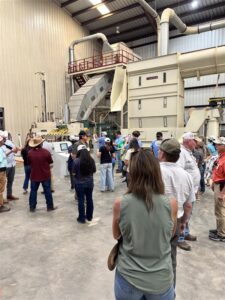
While at BCT, tour attendees were treated with homemade ice cream with an array of flowers including peach, blueberry, and strawberry. The ice cream was from a local shop right down the road called Burton Brooks Peach Orchard. Following ice cream, attendees took a walk throught the cotton gin seeing how the process takes place and also recieved insight on current technologies on modern day equipment.
Now you make ask why attendees were brought to a cotton gin while on a peanut tour. Farmers must rotate their crops and peanuts and cotton often go hand in hand. Jessica Goodman stated while on the tour that 100% of their peanut growers also grow cotton.
View the 2025 Georgia Peanut Tour Photo Album
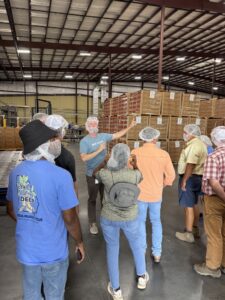 Tour attendees visiting MANA Nutrition in Fitzgerald, Georgia, received an inside look into Ready-to-Use Therapeutic Food (RUTF). RUTF is a dense, nutrient-rich food used to treat severe malnutrition. The purpose of RUTF is to help children gain weight, improve strength, and restore overall health. It is made with milk, multivitamins, and peanut butter. The product is especially effective because it is shelf-stable and requires no preparation.
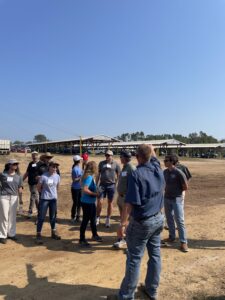 Attendees had the opportunity to visit a buying point in the heart of Coffee County, Georgia. Douglas Peanut and Grain Company serves as the first point of delivery for freshly harvested peanuts in the county. Once peanuts are harvested from the field, farmers must first tag their load right there in the field before transporting it—either in wagons or semi-trailers—to the buying point.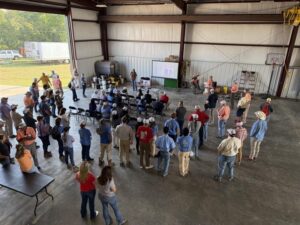
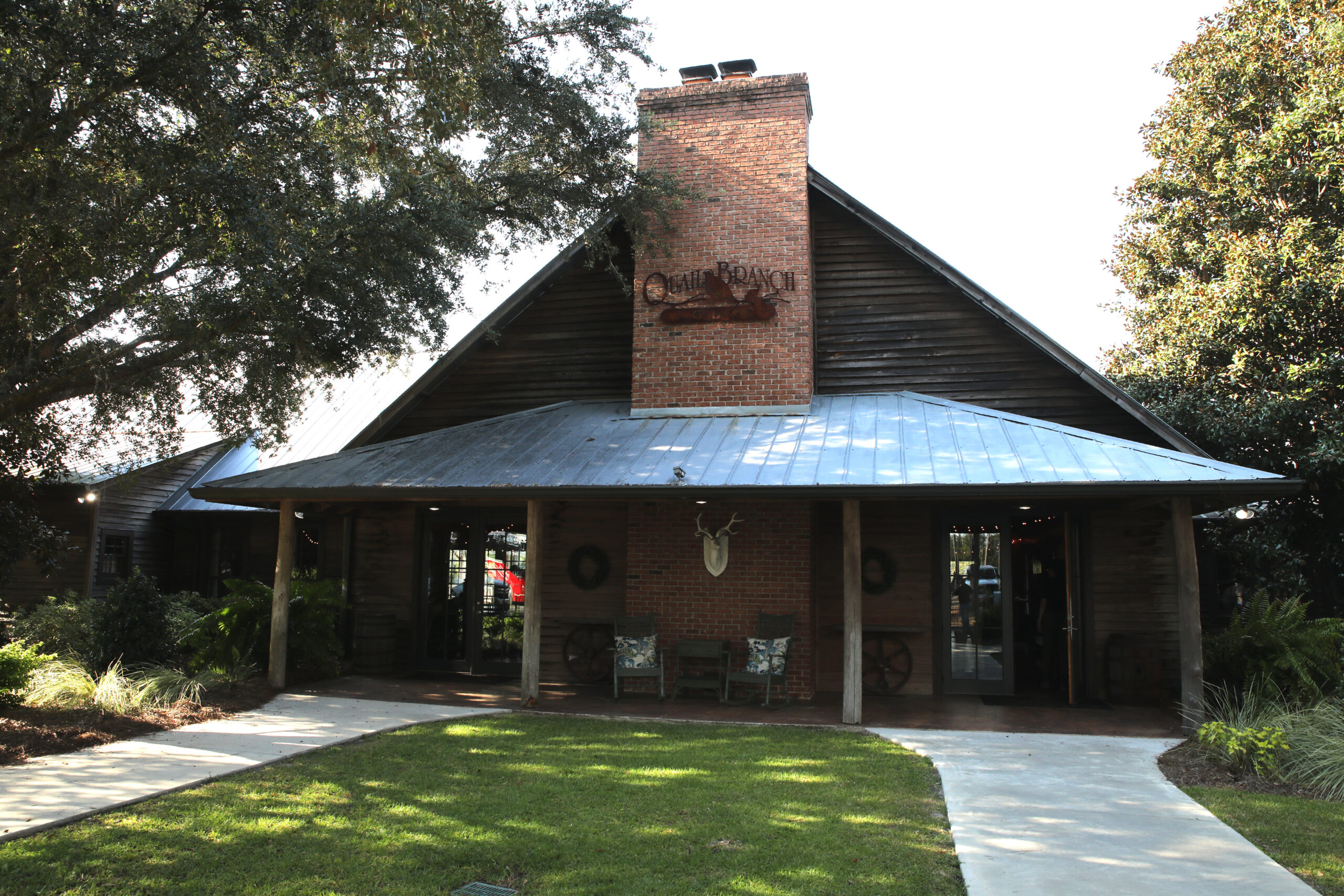 The 2025 Georgia Peanut Tour concluded with dinner hosted at the
 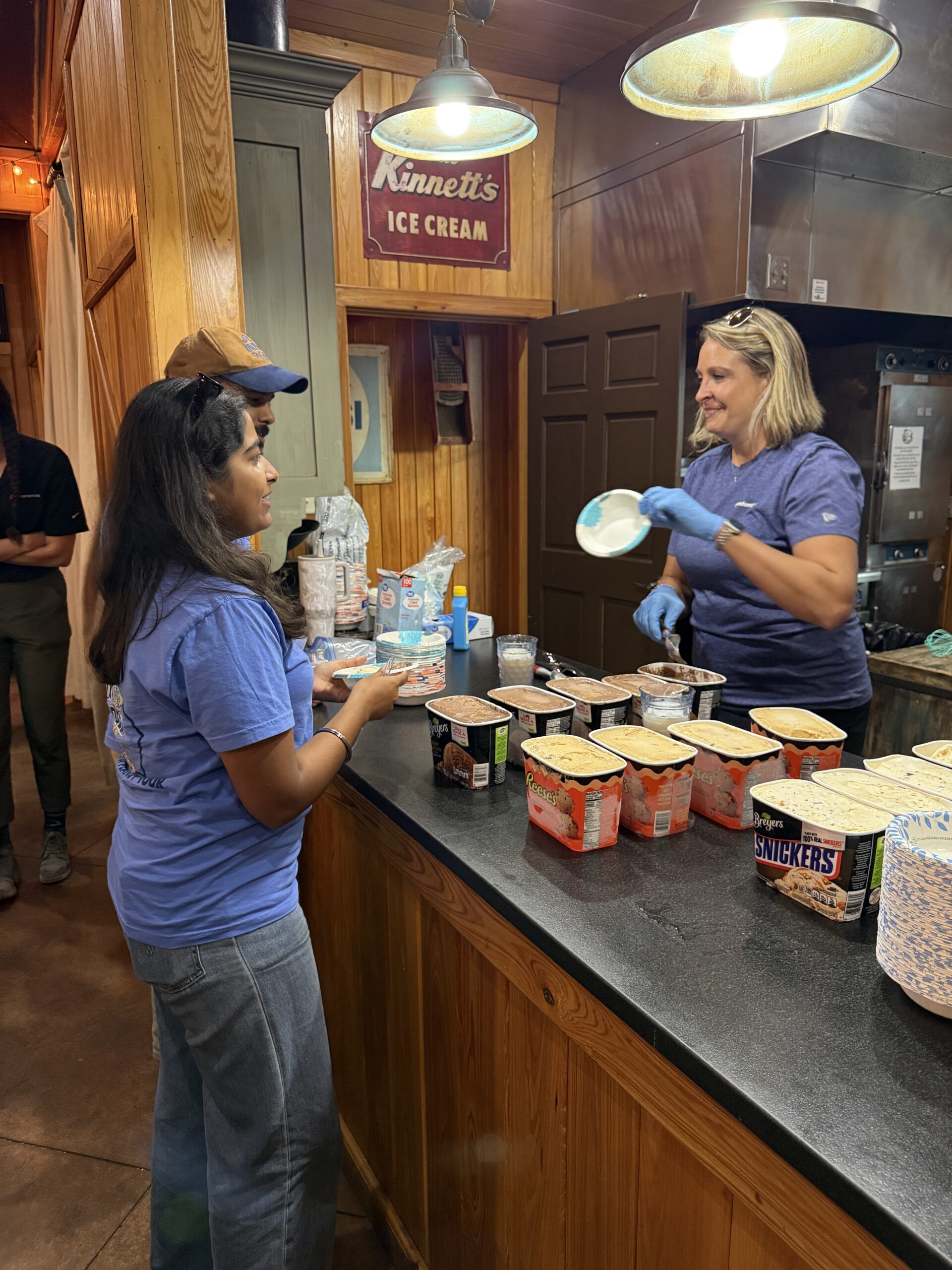 A Georgia Peanut Tour tradition, the Wednesday night meal featured the famous low country boil and peanut-inspired ice cream sponsored by
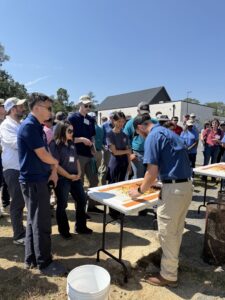 Georgia Peanut Tour attendees got to dig even deeper into a day in the life of a farmer nearing harvest. One of the steps a farmer has to take to know if his peanuts are ready to harvest is assessing the maturity of their peanuts. Extension agents Cale Cloud, Tucker Price and Jacob Kalina taught tour attendees how a farmer may go about determining the maturity of their peanuts.
 Colombo North America
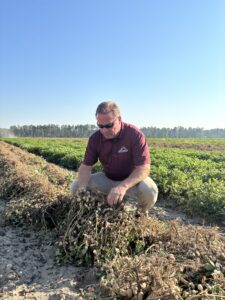 The first stop of the 2025 Georgia Peanut Tour highlighted the beginning of the peanut harvesting process—digging. Digging takes place approximately 120 to 150 days after planting. When conditions are just right, farmers take a digger up and down the rows. The digger gently pulls up the plants, shakes off the excess soil, and lays the plants back down with the peanuts facing the sun. This allows the peanuts to dry for a few days before the combine comes back through.
 We would like to welcome you to the 2025 Georgia Peanut Tour. Whether this is your first time with us, or you are a “Peanut Tour Veteran,” we are very happy to host you on our 37th tour. As in previous years, you will be immersed in the production efforts of one of Georgia’s most important agricultural crops, and we hope this gives you better insight not only into the challenges our farmers face, but also reasons why we say that the world’s best peanuts are produced in Georgia. It is our hope that you will come to better understand and appreciate the heritage of peanut production in our state. Those engaged in the peanut industry, including farmers, buyers, processors, researchers, Extension personnel, and Georgia Peanut Commission representatives, are proud that Georgia is the leading peanut-producing state in the United States, and we are excited to share this year’s crop with you.