 The final seminar of the tour brought attendees to Service Brewing in Savannah, Georgia, where agriculture, technology and industry came together for a day of learning and conversation.
Attendees heard from industry representatives across several areas of the peanut industry. Brian Martinez and Carter West with John Deere shared insight into emerging technologies and innovations that are helping shape the future of peanut production.
Courtney Dorsett with Premium Peanut and the American Peanut Shellers Association gave attendees a look inside the shelling process and discussed the ways shellers work to maintain quality throughout the journey from seed to consumer.
The conversation continued with Nick Lightfoot of WECO, who discussed moisture monitoring and how technology can help improve drying consistency and efficiency. Brian Wood with Georgia Plant Food introduced the Georgia Plant Food Educational Society, sharing more about its mission and the important role fertilizer plays in agriculture.
The day also offered a unique look beyond agriculture, as the owner of Service Brewing shared the history of the building and the story behind how the brewery came to be.
From new technology in the field to quality control in the shelling plant, the final seminar highlighted the many people, technologies and industries working together to move Georgia agriculture forward.
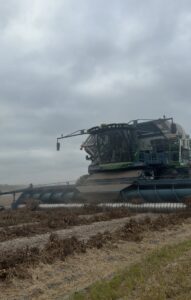 Today’s stop in Bulloch County at Sikes Farms gave attendees a close-up look at peanut harvest in action as a combine worked its way through the field, picking up rows and separating the peanuts from the vines. As the peanuts are lifted into the combine, the pods are separated from the plant and collected in the machine’s hopper, while the vines are left behind in the field. It’s a process that requires careful timing, specialized equipment and experience to efficiently bring the crop from the field to the next stage of production.
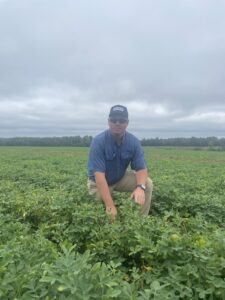 On the second day of the 2026 Georgia Peanut Tour, attendees got an up-close look at one of the first major steps of peanut harvest: digging. After spending approximately 120 to 150 days developing beneath the soil, peanuts reach the point where they are ready to be lifted from the ground. A digger travels through the field, carefully loosening the plants, shaking away excess soil and turning them back onto the ground with the peanuts exposed to the sun. The plants are then allowed to cure and dry in the field for several days before the combine returns to harvest the peanuts.
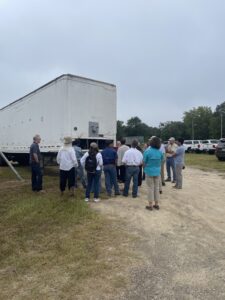 A stop at Sylvania Peanut Company gave attendees an inside look at what happens to Georgia peanuts once they leave the field. The group was able to see firsthand how a buying point fits into the peanut industry and the many steps that take place before peanuts continue on to their next destination.
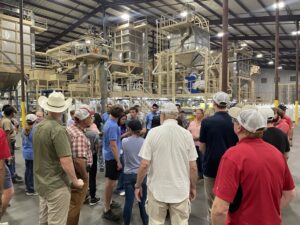 After leaving MANA Nutrition, tour attendees hopped on I-75 and headed south to Tifton Quality Peanuts in Tifton, Georgia. Tifton Quality Peanuts began its shelling operation in 2005 and has been running strong ever since. The company is a grower-owned shelling facility. One of the highlights of the tour was the very large domes where the peanuts are stored. Each of the three domes can hold up to approximately 13,000 tons of peanuts. Between the domes and additional warehouses, the facility can store up to 70,000 tons on site.
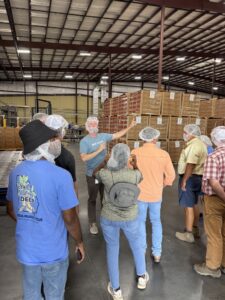 Tour attendees visiting MANA Nutrition in Fitzgerald, Georgia, received an inside look into Ready-to-Use Therapeutic Food (RUTF). RUTF is a dense, nutrient-rich food used to treat severe malnutrition. The purpose of RUTF is to help children gain weight, improve strength, and restore overall health. It is made with milk, multivitamins, and peanut butter. The product is especially effective because it is shelf-stable and requires no preparation.
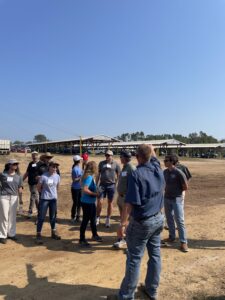 Attendees had the opportunity to visit a buying point in the heart of Coffee County, Georgia. Douglas Peanut and Grain Company serves as the first point of delivery for freshly harvested peanuts in the county. Once peanuts are harvested from the field, farmers must first tag their load right there in the field before transporting it—either in wagons or semi-trailers—to the buying point.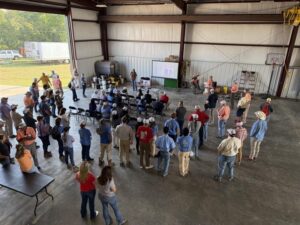

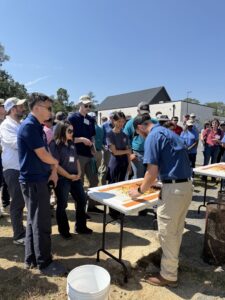 Georgia Peanut Tour attendees got to dig even deeper into a day in the life of a farmer nearing harvest. One of the steps a farmer has to take to know if his peanuts are ready to harvest is assessing the maturity of their peanuts. Extension agents Cale Cloud, Tucker Price and Jacob Kalina taught tour attendees how a farmer may go about determining the maturity of their peanuts.