24th Annual Georgia Peanut Tour set for September

The Georgia Peanut Tour Committee has set September 14-16, 2010, as the dates for the annual tour in the Americus, Ga. area. The tour spotlights the northwest part of Georgia’s peanut production area. The tour includes a cross section of field conditions, peanut harvest clinics, production research at the University of Georgia Southwest Research and Education Center in Plains and the National Peanut Research Laboratory in Dawson, Ga., peanut handling and grading facilities and on-farm demonstrations. The tour also includes a visit to Lance Snacks in Columbus and McCleskey Mills in Smithville, Ga.

Doster Warehouse

2009GPT_145doster

Jack Chastain of Doster Warehouse visits with Georgia Peanut Tour attendees.

After leaving McRae, Ga., the Georgia Peanut Tour headed over to Doster Warehouse, located on Georgia Highway 280, in Rochelle, Ga. Doster Warehouse owns and operates three peanut buying stations in South Georgia and also contracts with other individually owned stations to supply a farmerstock base for the shelling operation. Opened in 1945 by Norman B. Doster, Doster Warehouse offers its grower customers a competitive market with great support services and its manufacturer customers with the industry’s highest quality shelled peanuts. Doster started the warehouse selling feed, seed, fertilizer and lime and eventually put up his first peanut warehouse to begin storage on his own. Today Doster employs around 70 people in its home operation and operates subsidiaries in various towns in Georgia.

Using the Peanut Profile Board at Harvest

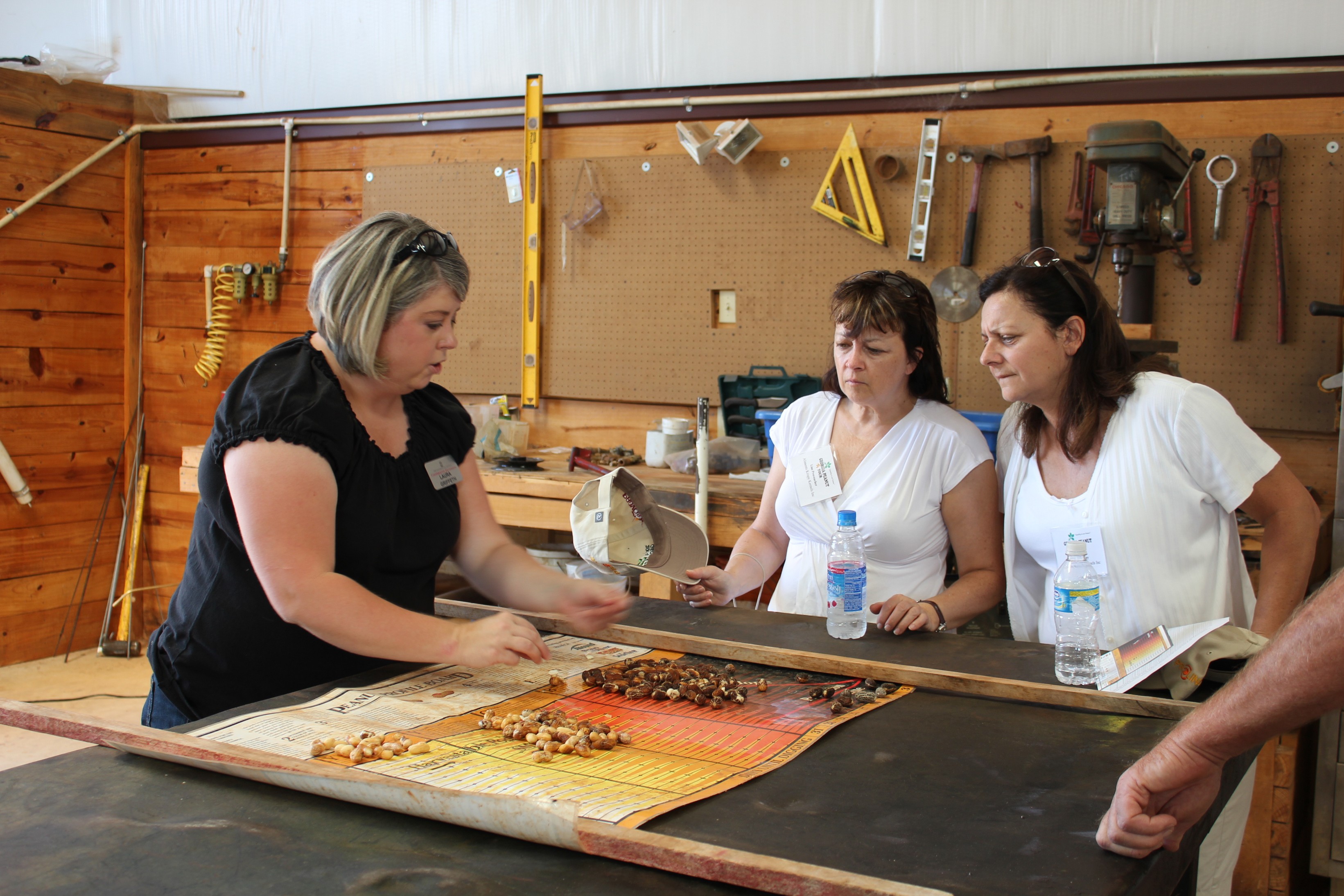
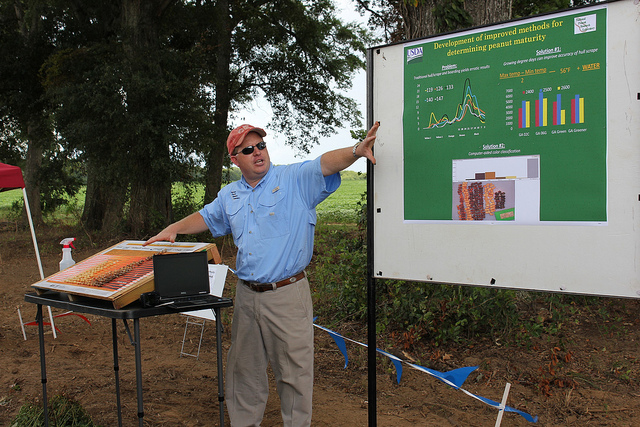
Attendees at the Georgia Peanut Tour were able to learn the unique way farmers determine the best time to harvest their peanuts. Farmers utilize the hull scrape method or pod blasting and the Peanut Profile Board to determine if peanuts have reached optimum maturity for harvest. Digging peanuts is one of the biggest decisions farmers make each year. The maturity of a peanut affects the yield, flavor, grade and shelf life. Farmers can lose as much as 500 to 700 pounds per acre in fields if peanuts are harvested too early or too late. During the tour several county agents set up stations to show attendees how to use the Peanut Profile Board. Jay Williams, retired University of Georgia extension engineer and developer of the profile board, explains how farmers and county agents use the profile board at harvest in this video.

Pierce & Ware County Agriculture Update

James Jacobs, University of Georgia Extension coordinator, provided an update on the Georgia Peanut Tour regarding peanut production in Pierce and Ware County. Both of these counties have seen a reduction in peanut acreage and a shift in acreage to soybeans. This year Pierce County farmers planted 6,000 acres and Ware County farmers planted 1,000 acres. Many acres were planted late due to rains in May. He says, farmers in this area have had trouble with white mold but overall the crop is looking fair and many farmers will begin harvest in October.

Appling & Wayne County Agriculture Update

Mark Frye, University of Georgia Extension county agent, provided an update on agriculture in Appling and Wayne County during the Georgia Peanut Tour. Peanut acreage decreased in these counties due to price and market situation. According to Frye, it was very dramatic decreasing from 17,000 acres in 2008 to 9,500 in 2009. The majority of acres shifted to cotton and soybeans. The crop this year started out extremely wet since the counties had a record rainfall in May. According to Frye, both counties had pretty decent rainfall this year until the last few weeks. In Wayne county farmers have experienced a little more army worm pressure in their peanuts than in Appling County. Appling County ranked 23rd in 2008 of total farm gate value out of 159 counties.

Dodge County Agriculture Overview

Furman Peebles, Dodge County Extension Coordinator, provided tour attendees with an overview of peanut production in the area. There are 3,800 acres of peanuts grown in the county with 90% strip tilled and 3,000 acres irrigated. According to Peebles, approximately 530 acres of peanuts will be sold as green peanuts for boiling by Hardy Farms. He predicts yield to range from 3,400 to 3,500 pounds per acre for peanuts.  Growers in the county have had problems with dry weather and the heat in June and trouble with white mold. Cotton is also grown in the county and farmers planted 13,000 acres this year.

Wheeler County Agriculture Overview

Mike Hayes, Wheeler County Extension Coordinator, provided information to the Georgia Peanut Tour attendees regarding agriculture production in Wheeler County.  He says, peanut acreage is about half of what it was 20 years ago. Peanut acreage for 2009 is 786 acres with 90% irrigated and 100% strip tilled. Growers have had several problems this year with weed control and cost of production. The county is still in the peanut business mainly for rotaton with cotton.  Wheeler County has also lost some of their peanut infrastructure in the county by losing the local peanut buying point. Soybeans is the counties largest crop followed by cotton and corn. Many farmers have also diversified by growing snap beans, watermelon, cantaloupe and other vegetables.

Laurens County Agriculture Overview

Laurens County Extension Coordinator, Raymond Joyce, says the peanut crop in Laurens County looks good this year.  Peanut acreage in the county continues to decline and shifting to soybean acreage and longleaf pine. The total peanut acreage for 2008 was 3,923 acres and the 2009 acreage for the county is even less at 1,654 acres. The drop in the number of farmers growing peanuts has also declined from 40 to 50 down to 10 or less growers. Peanut farmers have faced production issues with controlling herbicide resistant weeds, high input prices, and low commodity prices. Farmers in Laurens County also grow soybeans, corn, cotton, and hay.

Telfair County Agriculture Overview

Jack Wall, Telfair County Extension Coordinator, provided info to the Georgia Peanut Tour attendees on peanut production in the area. He says the peanut crop in Telfair County looks good this year. There are 2,600 acres of peanuts planted this year which is almost half of the peanuts planted in 2008.  The majority of peanuts are strip-tilled following a wheat cover crop. Sixty percent of peanuts in Telfair County is planted on irrigated land. Weed pressure is getting greater and greater and most growers are continuing to have problems with pigweed. Wall estimates yield at 3,500 pounds per acre in the county.

Tour visits Weather Station

Rabiu Olatinwo, University of Georgia

Rabiu Olatinwo, University of Georgia

The Georgia Peanut Tour stopped at the Georgia Automated Environmental Monitoring Network weather station in McRae, Ga. The AEMN was established in 1991 by the University of Georgia College of Agricultural and Environmental Sciences and collects detailed weather information and other environmental variables across the state of Georgia.

There are 77 automated weather stations across Georgia. Each weather station monitors relative humidity, air temperature, soil moisture, soil temperature at three different depths, wind speed and direction, solar radiation, barometric pressue, and precipitation. Some stations also monitor open pan evaporation, water temperature and leaf wetness.  The data is scanned at a one-second frequency and every 15 minutes a summary is calculated and stored in the data logger. The data is downloaded into a computer at the UGA Griffin Campus and once it is processed, the data is made available for the public to view online at www.georgiaweather.net.  The data is used for irrigation management, water conservation, integrated pest management, precision farming and more.

Rabiu Olatinwo with UGA explains more about the weather station.