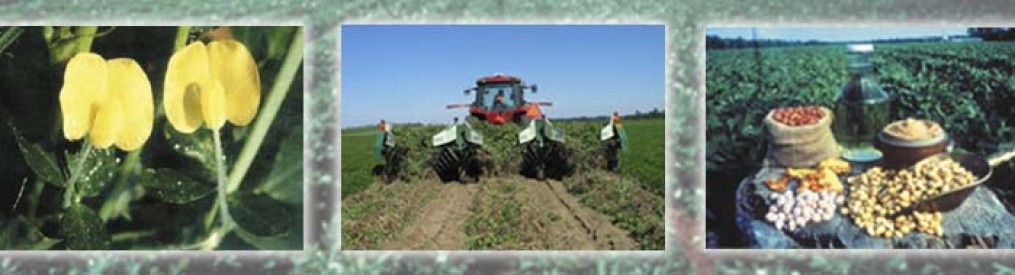
The Georgia Peanut Tour visited Chase Family Farms in Macon County, Ga. Donald Chase, owner, also serves as a board member of the Georgia Peanut Commission. The farm consists of 1,600 acres and 500 acres in peanuts. Donald credits a lot of the advances he has made on the farm to the researchers and the extension service. Donald planted the GA-O6G peanut cultivar this year on May 6. He utilizes a four-spray fungicide program and sprays at night to control white mold and other diseases. View the video below to learn more about Chase Farms and see peanut digging.
Andersonville National Historic Site

Andersonville National Historic Site
The Georgia Peanut Tour visited the Andersonville National Historic Site in Andersonville, Ga. Andersonville, also known as Camp Sumter, was a Confederate prison camp during the Civil War where over 45,000 Union soldiers were held over the course of 14 months. The prison, which was intended for only 10,000 prisoners, was built in 1864 and was commanded by Captain Henry A. Wirz. The Confederate government could not provide ample food, shelter, medical care, or water to the prisoners. The camp was closed down in the summer of 1865, but by then 13,000 Union soldiers died from overcrowding, malnutrition, disease, poor sanitation, or exposure. Today, the public can view the actual prison camp in which the stockade walls are still standing, the National Prisoner of War Museum, and the Andersonville National Cemetery where over 18,000 deceased veterans are buried.
Marion County, Ga. Ag Overview
Marion County Extension Coordinator, Roger D. Sinyard, gave an update to the Georgia Peanut Tour attendees on peanut production in his county. This year farmers have planted a total of 1,400 acres of peanuts with 40% of the crop irrigated and 60% dryland. This year farmers in Marion County have had to face severe drought and hot temperatures. This has caused the peanuts planted on non-irrigated land to not produce as well as irrigated peanuts. Sinyard is expecting farmers to produce around 3,500 tons this season. Marion County also produces of corn, soybeans, wheat, and grain sorghum.
Visit to Todd Powell Farm
The Georgia Peanut Tour visited the farm of Todd Powell in Marion County, Ga. In 2010, Powell planted 115 acres of the GA-O6G peanut cultivar. All of the peanuts are under irrigation. He also grows cotton and corn. Powell says the drought has hit him hard this year. View the video below for more information on the Powell Farm and see peanut harvest firsthand.
Tour of Lance
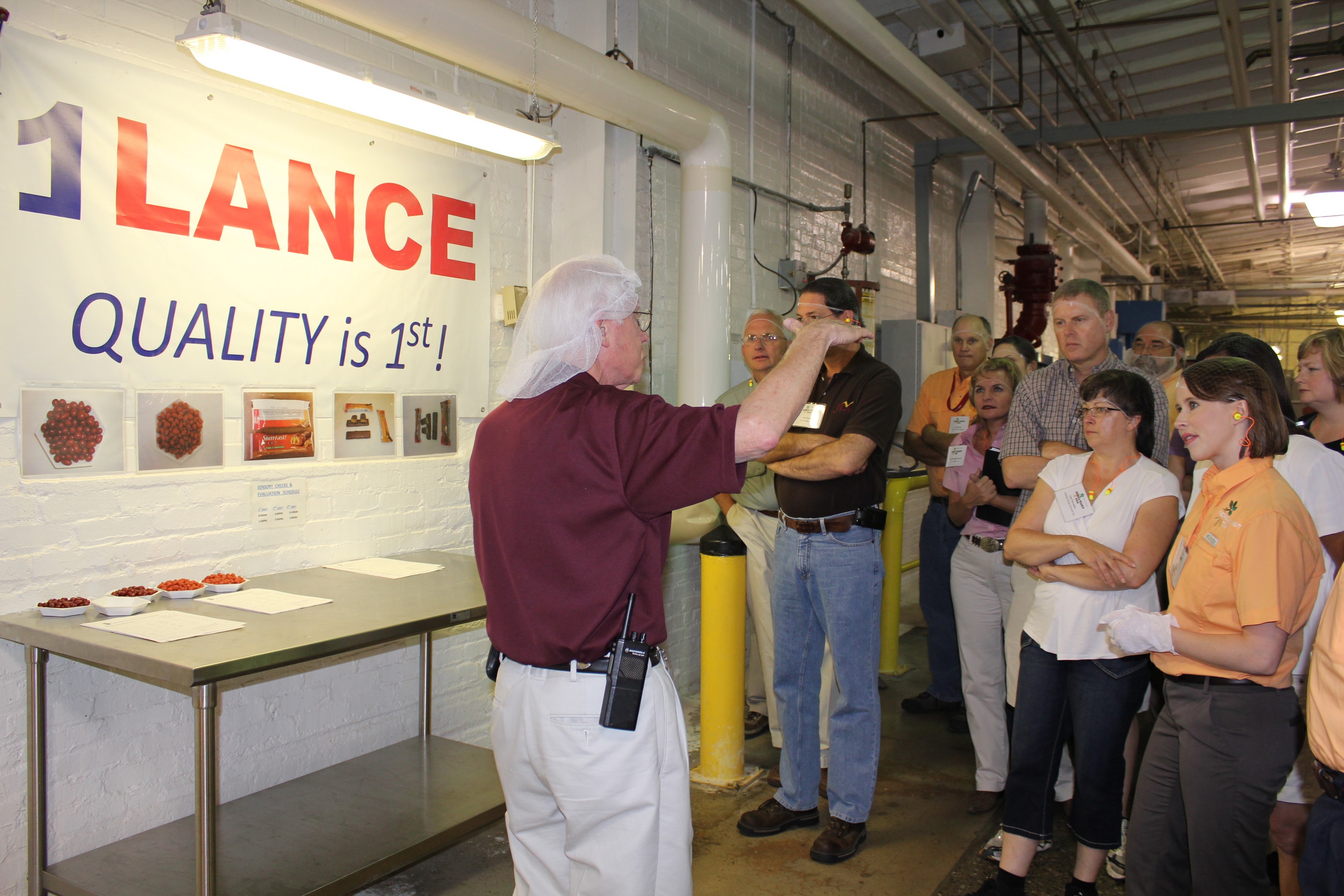
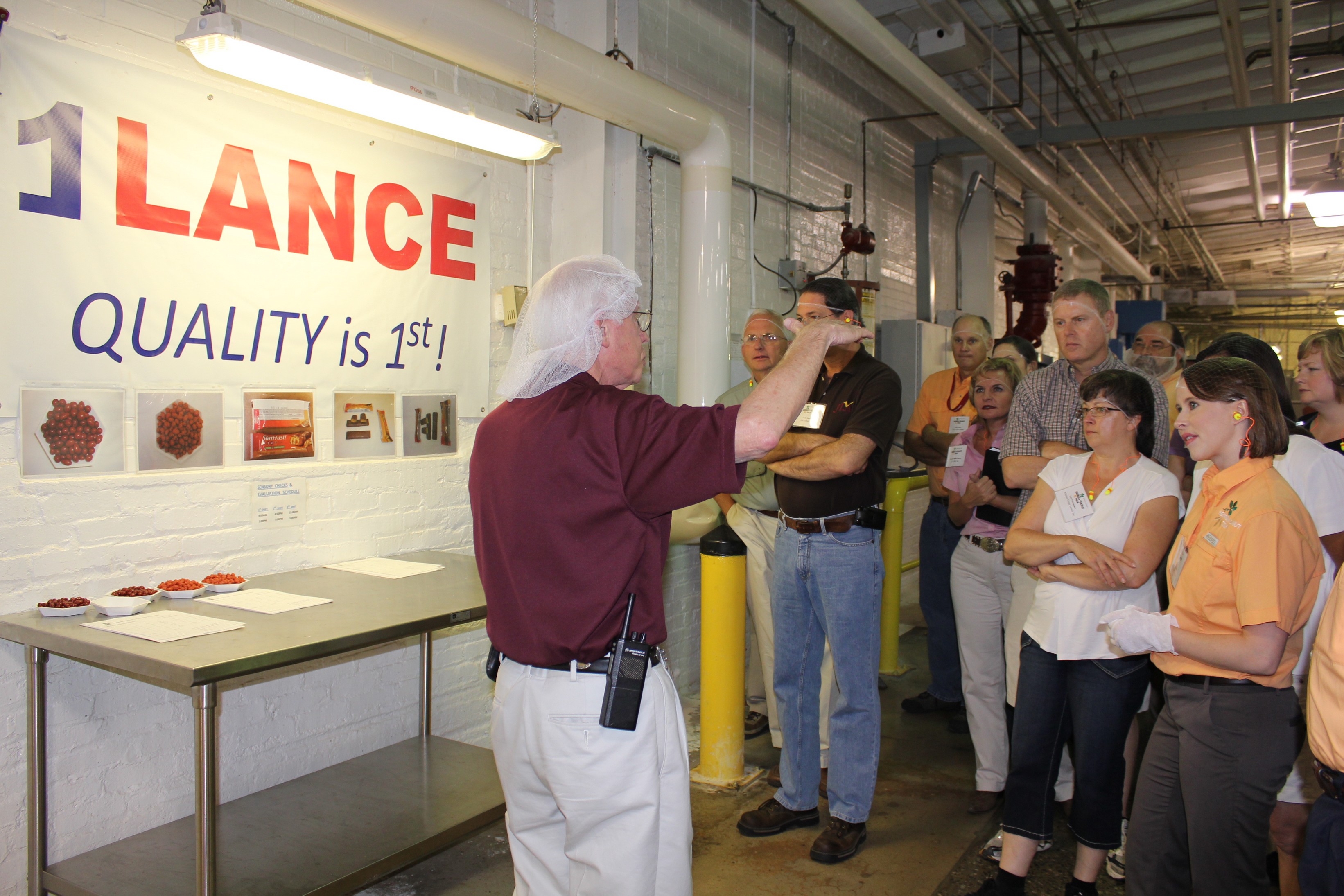 The Georgia Peanut Tour made a stop today at Lance Snacks in Columbus, Ga. Lance Snacks started with two men selling single serve snacks in 1913 and today they are a leader in the snack food industry and one of the largest manufacturers and distributors of snack foods in the United States, especially in the South. Did you know – Lance uses 28,000 farmer stock tons of peanuts annually and 14 million pounds of peanut butter annually for crackers. Attendees of the peanut tour took a tour of the Lance facility and were shown how peanut products are processed and made into the final product that consumers enjoy!
2010 Peanut Crop Overview
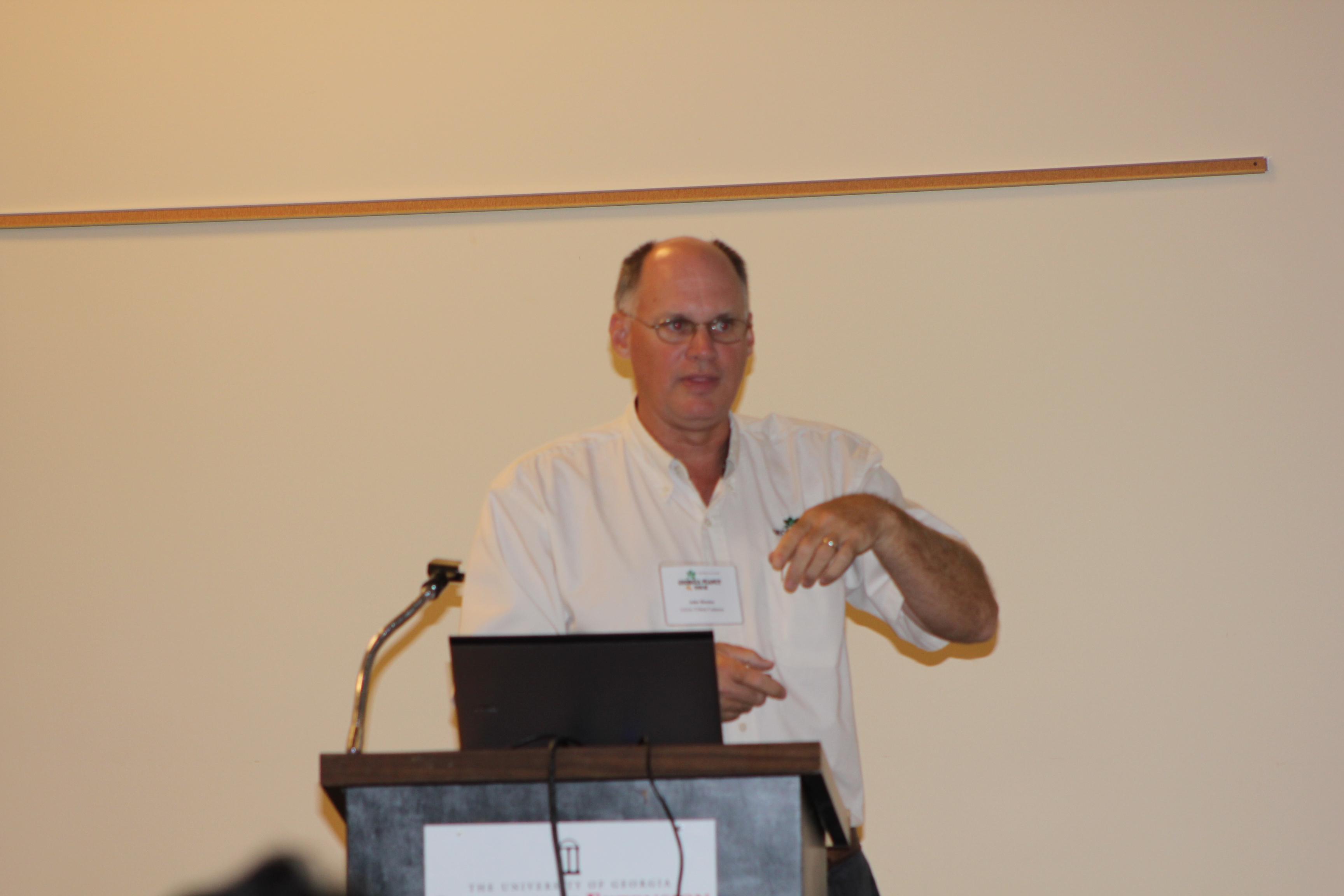
John Beasley, University of Georgia Peanut Agronomist
John Beasley, University of Georgia Extension peanut agronomist, gave an update on the 2010 Georgia peanut crop during the Hot Topics seminar held yesterday that opened up the 2010 Georgia Peanut Tour. Beasley stressed that farmers were faced with many challenges and that heat was one of the biggest factors this year. During the 92-day period of June 1-August 31 temperatures reached 95 degrees or higher on multiple days on the UGA Tifton, Attapulgus, and Plains farms. Beasley stated that these very high temperatures took a toll on the peanut plants’ ability to develop. Pest problems have also made a major impact on the 2010 peanut crop in Georgia. White mold was a big issue this year because of the idyllic weather conditions that caused the disease to develop rapidly and extend over fields. Beasley also mentioned in his presentation that the rise of insect populations was an issue for peanut farmers this year. Growers had to battle species of insects that had not been a problem before and make room in their budget to properly handle them. “Insecticides are one of the most costly of the pesticides to apply so the extra cost in insecticide applications will make a huge impact on the producers’ chances of profit potential,” Beasley said.
View John Beasley’s presentation on the 2010 Peanut Crop Update (pdf document)
Welcome Greetings
Amanda Smith, chairman of the Georgia Peanut Tour Committee, welcomes attendees to the 24th Annual Tour. The video provides an overview of the tour stops throughout the next two days.
Dean Angle provides update on UGA College of Ag

Scott Angle, Dean of the UGA College of Agricultural & Environmental Sciences
The University of Georgia College of Agricultural & Environmental Sciences (UGA CAES) Dean Scott Angle provided an update on the college during the Hot Topics Seminar, which kicked off the Georgia Peanut Tour today. He says the college’s budget has been reduced by 25 percent and the college will see significant changes over the next few years. Angle says the college will need to downsize in some areas and will not be able to teach, provide research and extension services on every topic. “We are looking into collaboration with other land grant universities in the Southeast so that we can reorganize to maximize use of our resources,” Angle says. “We are not being forced into these changes. It’s simply the right thing to do and we are good stewards of the tax payers’ money.” Another change in the college that will have a profound effect on the peanut industry is the public breeding program. Angle says, other colleges report that when plant breeders retire, they will not be replaced. On the other hand, Angle says, the college will become the administrator for developing new cultivars and move new germplasm into the marketplace. “We have a great program for breeding and we are committed to the breeding programs whether it is for peanuts, turf grass, ornamentals or blueberries,” Angle says.”We are filling in the gaps in areas where the private sector has not picked up the breeding programs.”
For more information on the Georgia Peanut Tour follow twitter updates at www.twitter.com/georgiapeanuts.
A photo album of the tour will be added tomorrow so check back for more updates.
24th Annual Georgia Peanut Tour set for September
The Georgia Peanut Tour Committee has set September 14-16, 2010, as the dates for the annual tour in the Americus, Ga. area. The tour spotlights the northwest part of Georgia’s peanut production area. The tour includes a cross section of field conditions, peanut harvest clinics, production research at the University of Georgia Southwest Research and Education Center in Plains and the National Peanut Research Laboratory in Dawson, Ga., peanut handling and grading facilities and on-farm demonstrations. The tour also includes a visit to Lance Snacks in Columbus and McCleskey Mills in Smithville, Ga.
Doster Warehouse

Jack Chastain of Doster Warehouse visits with Georgia Peanut Tour attendees.
After leaving McRae, Ga., the Georgia Peanut Tour headed over to Doster Warehouse, located on Georgia Highway 280, in Rochelle, Ga. Doster Warehouse owns and operates three peanut buying stations in South Georgia and also contracts with other individually owned stations to supply a farmerstock base for the shelling operation. Opened in 1945 by Norman B. Doster, Doster Warehouse offers its grower customers a competitive market with great support services and its manufacturer customers with the industry’s highest quality shelled peanuts. Doster started the warehouse selling feed, seed, fertilizer and lime and eventually put up his first peanut warehouse to begin storage on his own. Today Doster employs around 70 people in its home operation and operates subsidiaries in various towns in Georgia.