Attendees were able to visit Fudge Peanut Buying Point in Colquitt, Georgia, on the 29th Annual Georgia Peanut Tour. During the visit participants were able to learn more about the grading process for peanuts and the sorting, drying and storage methods at a buying point. As peanuts enter the buying point the semitrailers of peanuts are dried and then samples are taken from the trailers for grading. The peanuts are graded by employees of the Georgia Federal State Inspection service. Fudge Buying Point currently has 92 dryers that work to dry the peanuts to at least 10% moisture. The dryers are like large hair dryers that are hooked up to the trailers. Sometimes peanuts enter the buying point at 20% moisture level and it can take up to 20 hours to dry the peanuts. At Fudge Buying Point, they are testing moisture sensors in each trailer that will allow them to make sure they are not over drying peanuts. All of the dryers are hooked up to a computer that allows the buying point to change the temperature of all 92 dryers at one time. They take caution to not dry the peanuts too fast which can cause splits or to burn the peanuts. Fudge Buying Point is owned by Birdsong Peanuts.
Author: joycrosby
TSWV and leaf spot in peanuts
Albert Culbreath, University of Georgia research plant pathologist, focuses his research projects on tomato spotted wilt virus (TSWV) and leaf spot. According to Culbreath, TSWV has flared up quite severe this year in some areas and has been a challenge for growers. The virus is spread by thrips so he is studying various insecticides that may help. There are also new peanut varieties developed by the University of Georgia and the U.S. Department of Agriculture that has improved resistance to TSWV. He has noticed that the planting date that minimizes TSWV seems to maximize leaf spot. Culbreath is also working with geneticist and breeders to develop molecular markers to develop selection of lines with TSWV and leaf spot resistance.
Soilborne disease in peanuts
Tim Brenneman, University of Georgia research plant pathologist, focuses his research projects on soilborne disease in peanuts. In the Southwest corner of Georgia, nematodes can cause a lot of damage to peanuts so Brenneman focuses his research at the UGA Attapulgus Research and Education Center on nematodes. “In Attaplugus we have some great fields to study nematodes,” Brenneman says. “The soils are very sandy and very conducive to high nematode populations.”
According to Brenneman, there are some new nematicides and new peanut varieties that are nematode resistant. His research trials focus on two new nematicides and the different ways to use those and use of those new products on susceptible varieties and the new nematode resistant varieties.
Brenneman has also noticed a huge outbreak of white mold this year in Georgia. He says, white mold is one of the oldest diseases for peanuts in Georgia and in his almost 30 years of work, this has been some of the worst white mold he has seen in a long time. The weather conditions have been very favorable for white mold this year.
Replant decisions for peanuts
Scott Tubbs, University of Georgia cropping systems agronomist, continues his study on peanut plant stands and replant decisions. One study is related to non-uniform skips in the row where there are poor plant stands. Tubbs is trying to assess the yield potential when farmers have low plant populations, large gaps within a row, frequency of gap and length of gap in the row. “The research trial has a variety of skips and gaps within a 40 ft. row and the different combinations gives us the ability to assess the yield potential depending on how bad of a skip gap we have with frequency and duration of uniformed plant stands in a row,” Tubbs says. Part of this research came about from a previous research project on replant decisions on peanuts. “We were reviewing a variety of scenarios in order to determine the best time to replant and the plant populations to trigger a replant and how much time could lapse without losing a lot of yield due to various maturities in the same field.”
Insect pressure in peanuts
Mark Abney, University of Georgia research and extension peanut entomologist, says growers have faced a number of insect issues this year but nothing too severe. Farmers have had moderate to heavy thrips pressure, as well as pressure from three-cornered alfalfa hopper and foliage feeding caterpillars.
In his research trials, Abney is studying threshold development projects with thrips and three-cornered alfalfa hopper. In the research trial studying thrips, Abney is looking at thrips feeding damage to determine if farmers need to use supplemental foliar sprays in addition to use of at-plant insecticides. Abney is also looking to develop economic thresholds for three-cornered alfalfa hopper so growers will know when and if they need to treat for that pest.
Applied research for farmers
Extension plant pathologist with the University of Georgia conducts many research trials focusing on diseases of peanuts. “My research is very much applied and it has to be something that farmers are likely to use,” Kemerait says. “White mold has been the major focus of my research. We have some new and exciting products that have just been labeled for farmers.”
Kemerait is exploring the new products available for farmers and using older products in reduced input ways to try to manage diseases like white mold. Kemerait says, at the same time we are managing white mold we also have to make sure we are managing other diseases like defoliation from peanut leaf spot.
“I believe 2015 will be a year remembered by growers as the year of severe white mold,” Kemerait says. Most growers have struggled at times to manage the disease, even those that have used effective fungicide program. According to Kemerait, we have had a very warm year but the warm temperatures have made the disease like white mold very difficult to manage.
Tomato Spotted Wilt Virus (TSWV) has become hard to manage this year as well for growers. According to Kemerait, TSWV has basically been non-existent through the years of 2006 to 2008. Since 2013, Kemerait has noticed a slow and steady increase of TSWV. Unfortunately, there is not much farmers can do about the disease except for using the UGA peanut disease risk index and plant more resistant varieties.
Attapulgus Research and Education Center
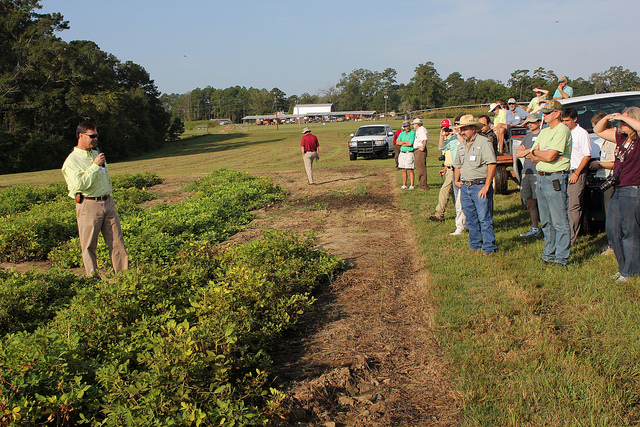 The Attapulgus Research and Education Center is located in the deep southwest corner of Georgia near the town of Attapulgus, Georgia, about 5 miles north of the Florida line. The warm, humid climate is ideal for major agricultural insect, weed, nematode and disease problems. This provides a unique place for UGA College of Agricultural and Environmental Sciences researchers to conduct studies in a controlled atmosphere to help farmers economically and environmentally deal with these challenges and to screen new crop varieties with pest resistance.
Farmers in this region grow many crops. The research here reflects that diversity. Researchers and staff work with peanuts, corn, cotton, soybeans, peaches, peppers, squash, sweet corn, snap beans and watermelons.
The center was originally the Shade Tobacco Experiment Station, established in 1939 to help the region’s many shade tobacco farmers at the time. It operated under the Coastal Plain Experiment Station in Tifton, Georgia. In the 1950s, the Campbell Soup Company Research Farm in nearby Climax, Georgia, was interested in growing okra and other horticultural crops and requested that such research be conducted on the station. The station continued to assist shade tobacco farmers, too, until cheaper labor drew the industry to South America in the early 1970s.
In 1974, with the shade tobacco industry gone from Georgia, the name was changed to the Extension-Research Center. The new center helped the former shade tobacco farmers learn to grow vegetable crops. In 1990, it was named the Attapulgus Research Farm. It later became the research and education center it is today.
Welcome to Thomas County
Welcome to Thomas County, Georgia, the host city of the 2015 Georgia Peanut Tour. Thomas County is located in South Central Georgia and known for its big oak trees, prosperous agriculture and thriving industries. Thomas County was created in 1825 from portions of Decatur and Irwin counties. Georgia’s 63rd county, and its county seat, Thomasville, were named for a hero of the War of 1812, General Jett Thomas. Thomasville is known for its annual Rose Festival; for the “Big Oak,” which has a limb spread of 175 feet; and for the McKinley Memorial Tree planted in 1896 as a salute to candidate William McKinley, who became the 25th President of the United States. Thomasville was a popular, turn-of-the-century, winter resort for wealthy northern families. Non-residents still maintain many large estates and hunting preserves. Many of these estates are listed on the National Register of Historic Places including the Susina Plantation Inn and the Lapham-Patterson House.
Since Thomasville is known for its history, then it was only fitting to hold one of the meals on the tour at the oldest restaurant in the state of Georgia – The Plaza Restaurant. Established in 1916, The Plaza has been the restaurant generations of southwest Georgians have come to for fabulous meals, celebrate special occasions, break bread with elected officials, or just enjoy the company of family and loved ones. Over the years The Plaza has had a variety of owners, most of whom were of Greek heritage. In 2007 a new era for The Plaza began when it was purchased from George Mathes, Andrew Poulos, and Angelo Mathes by Michael Regina, a visionary restauranteur and chef. Born in Manhattan and raised in upstate New York, Michael Regina owned and operated restaurants in New York from 1984 to 1998. Since coming to Thomasville it has been his mission to make The Plaza an even greater restaurant.
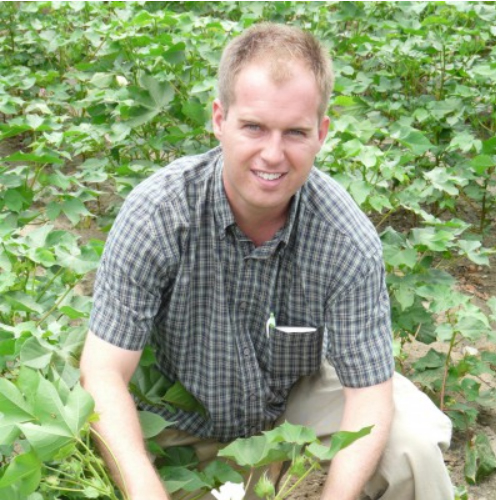 During the meal, Andrew Sawyer, University of Georgia Thomas County Extension agent, provided an overview of agriculture in the county. According to Sawyer, the top commodities in Thomas County include cotton (30,000 acres), peanuts (9,000 acres) and pecans (2,800 acres of orchards). There is also 200,000 acres of forest land. Agriculture is the number one business in the county which is also known for its plantations. The majority of acreage in Thomas County is dryland and farmers have struggled with white mold and tomato spotted wilt virus this year. To continue learning more about Thomas County agriculture visit Sawyer’s blog at www.thomascountyag.com.
Peanut processing and utilization
 The 2015 Hot Topics Seminar focused this year on peanut processing and utilization. During the seminar, Dr. Kirk Kealey provided an overview of the University of Georgia Food Product Innovation & Commercialization Center (FoodPIC). FoodPIC assists companies in developing new food products efficiently and economically. The center facilitates commercialization of food products by providing intellectual resources and physical facilities for both start-up ventures and existing food companies. FoodPIC was initiated by faculty in the Department of Food Science and Technology in the College of Agricultural and Environmental Sciences and associates of the University of Georgia. All are internationally recognized for development of innovative food products. The center is located in Griffin, Georgia, on the UGA Griffin Campus. It is approximately 30 miles south of the Hartsfield-Jackson, Atlanta Airport.
In addition to learning about FoodPIC, additional food scientists Dr. Koushik Adhikari, Dr. Yen-Con Hung, Dr. Dick Phillips and Dr. Jinru Chen provided information on consumer and sensory evaluation, peanut flour and oil, and probiotics in peanut butter. According to Dr. Adhikari, runner peanuts have been the dominant peanut type since 1979. The runner type of peanuts are grown primarily in Georgia, Alabama, Florida and Mississippi. The runner type of peanuts accounts for approximately 80 percent of the peanuts grown in the U.S. and mainly used for processing peanut butter. The runner type is also very poplar due to its good flavor and roasting characteristics especially for peanut butter.
View the presentations:
Dr. Kirk Kealey – Overview of UGA FoodPIC Center
Dr. Koushik Adhikari – Flavor of Roasted Peanuts
Dr. Yen-Con Hung – Utilization of peanut flour and oil
Drs. Dick Phillips & Jinru Chen – Peanuts in Life-Sustaining and Life-Sparing Foods
Overview of the 2015 Georgia peanut crop
The Georgia peanut crop looks very pretty good overall says Scott Monfort, University of Georgia peanut agronomist, during the Georgia Peanut Tour Hot Topics Seminar. More than likely our state average yield for this year will be approximately 4,300 lbs. per acre which is roughly 200 lbs. off of record yields recorded in 2012. Part of the reasons for a slight decline in yield is due to weather conditions – some areas had drought conditions, some had adequate rain and some had ideal weather so there will be a large discrepancy across the state on how good the crop looks. Many farmers are beginning to dig the early planted peanuts with a small percentage of acres being dug early due to disease. With 771,000 acres in the state, some farmers planted peanuts behind peanuts and that has caused an increase in some diseases and a potential decline in yields.
Peanuts are a very big crop for a lot of growers in the state of Georgia, especially the Southwest corner of the state, Monfort says. Growers in this historical peanut growing area produce some of the highest yields in the state. The tour will visit farmers in Grady, Decatur and Miller County to learn more about issues farmers face, how peanuts are harvested and more.
Download Scott Monfort’s presentation.
View time lapse video of peanuts from planting in May to July 2015.