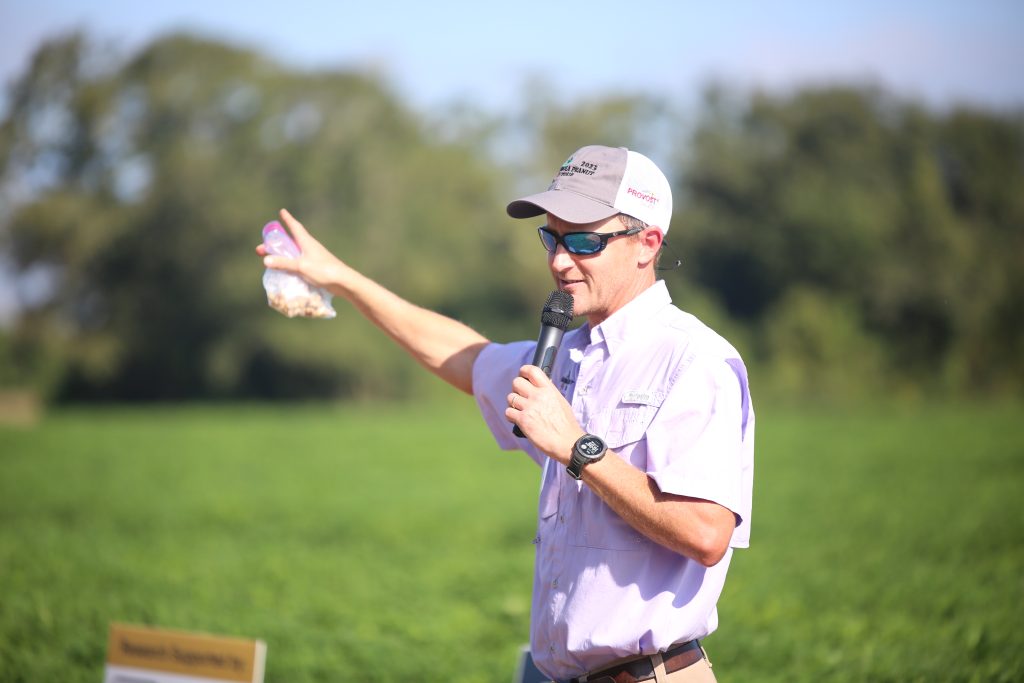
 Mark Abney, peanut entomologist at the University of Georgia, provided an overview of his work during the 2026 Georgia Peanut Tour. He receives the question many times from people asking, what does the peanut entomologist at the University of Georgia do?
According to Abney, his research and extension responsibilities center on helping growers manage insects in ways that protect their crop and improve profitability.
“We’re really interested in now is continuing to work on lesser cornstalk borer,” Abney says. “That’s an insect that affects all of our growers wherever they are in the state.”
Abney conducts research across Georgia because peanut production occurs in a variety of environments throughout the state. Research is conducted at locations including Tifton, Plains and Midville to better understand what growers in different areas need to do to manage insects most effectively.
“When you look across the state, you’ll see that there’s a lot of different environment,” Abney says. “We grow peanuts in different kind of places. It’s really important that we do research all over the state.”
That is where Abney sees his role as the peanut entomologist in helping growers. His research focuses on the insects that occur in peanuts, developing thresholds and evaluating insecticides and other management tools to determine what works best and what is most economical for growers.
The goal is to help farmers reduce the risk of insect injury, protect yield and make profitable decisions about when and how to manage pests.
Every year is different in terms of insect and disease pressure and 2026 is no different. The production year started out cool and with thrips pressure and tomato spotted wilt virus. Later in the season, farmers dealt with foliage-feeding caterpillars, including velvetbean caterpillars, which came into some areas during the last few weeks of the growing season.
According to Abney, the 2026 peanut season has been an average year in terms of insect pressure. Conditions have varied across the state, with some areas experiencing more foliage-feeding caterpillars while other areas have experienced less pressure.
Overall, Abney says growers have been able to manage insects pests effectively.
Abney’s research and extension program ultimately focuses on providing growers with the information they need to make effective pest-management decisions.
View the 2026 Georgia Peanut Photo Album.