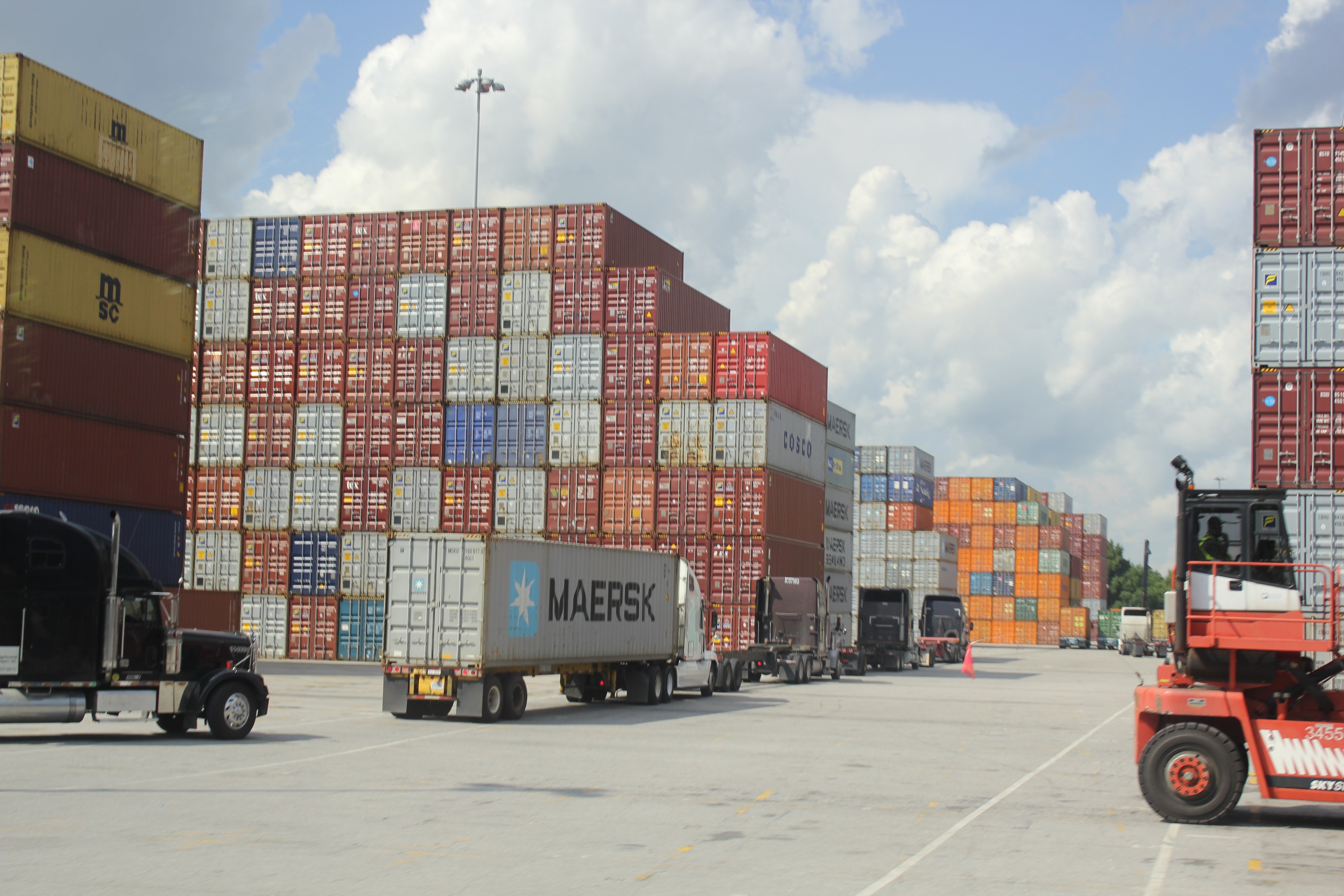
Exports move in and out at the Port of Savannah

2014_gpt_100sThe Port of Savannah is a major U. S. seaport located at Savannah, Georgia and also known as the Garden City Terminal. Its extensive facilities for oceangoing vessels line both sides of the Savannah River approximately 18 miles from the Atlantic Ocean. Operated by the Georgia Ports Authority (GPA), the Port of Savannah competes primarily with the Port of Charleston in Charleston, South Carolina to the northeast, and the Port of Jacksonville in Jacksonville, Florida to the south. The GPA operates one other Atlantic seaport in Georgia, the Port of Brunswick, located at Brunswick, Georgia, as well as two interior ports linked to the Gulf of Mexico, Port Bainbridge and Port Columbus.

Owned and operated by the Georgia Ports Authority, the Garden City Terminal is the fourth-busiest container port in the United States and provides access to 44 percent of U.S. consumers in 2-3 days. At 1,200 acres, it’s North America’s busiest single-terminal container facility. This allows for maximum efficiency and flexibility, concentrating all manpower, technology and equipment in one massive container operation.
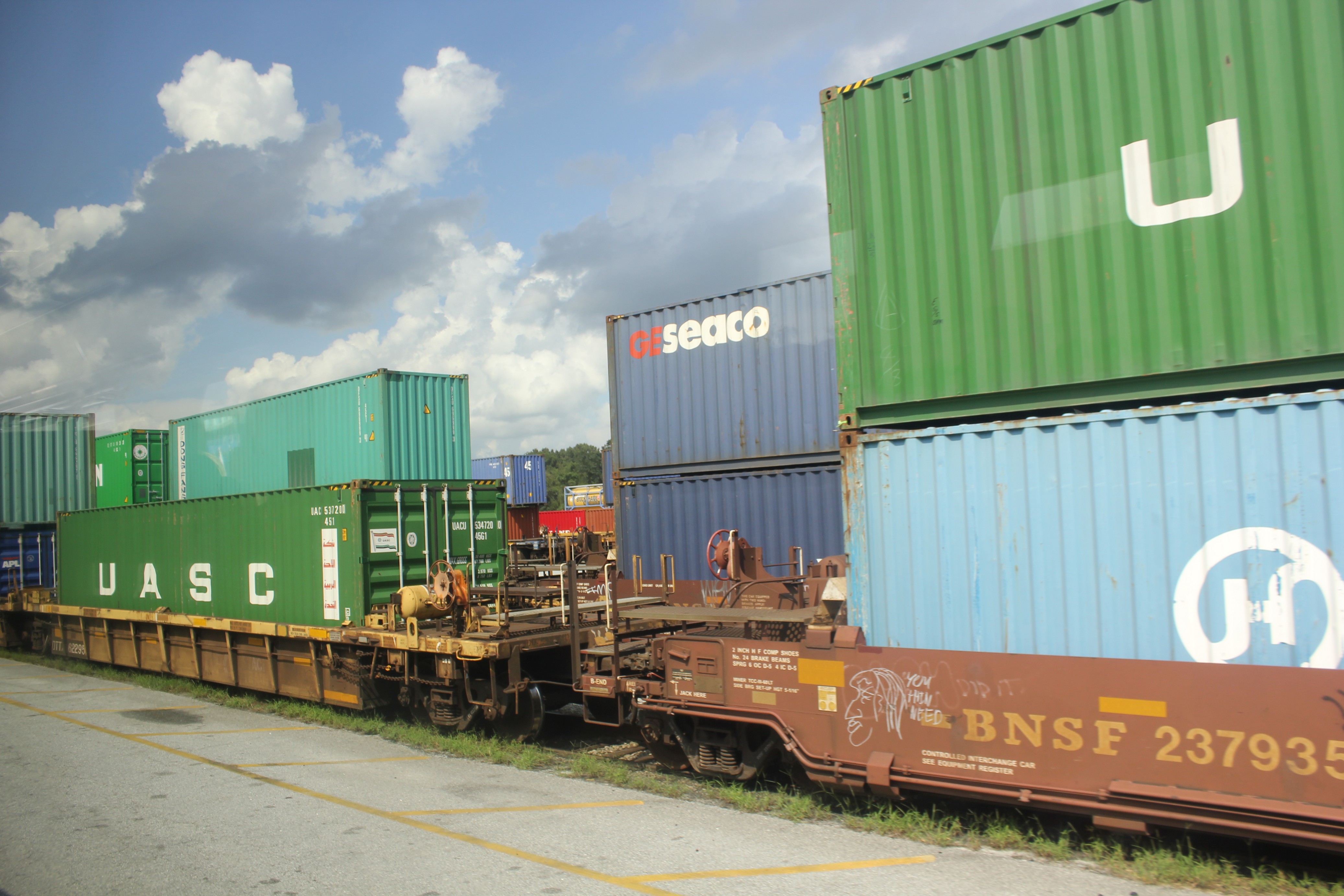
2014_gpt_095sThe terminal includes two Class I railroads on-site that provides freight by train to boat without weight restrictions. Other ports without a rail system have weight restrictions when moving containers via truck. The rail system helps with moving 2,000 lbs. a thousand miles on a single gallon of fuel. The port also sees approximately 8,000 trucks in and out through the day.

The port has also invested in more than 2,800 refrigerated container spaces, with more on the way. The refrigerated space allows another known Georgia product, poultry, to be exported through Savannah. In fact, the Port of Savannah exports so much poultry that if Georgia was a country then the state would be the fourth largest poultry exporter in the world.

Here’s a quick video clip of cargo being unloaded from a container ship at the Port of Savannah.

View 2014 Georgia Peanut Tour Photo Album

A growing opportunity in the export market

export peanut marketDuring lunch at the Bulloch County Extension office, tour attendees were able to learn more about the peanut export market from Stephanie Grunenfelder, vice president of international marketing with the American Peanut Council. According to Grunenfelder, inshell exports in 2013 were 82,000 MT, almost double those in 2012. She says the biggest export increases were to Europe. For the first half of 2014, exports have continued strong for the U.S., she says. While lower than last year, they are still way ahead of the five year average many traders say that will total almost as high as last year.

One of the U.S. key export markets is Japan. “Currently, the Japanese buy the majority of their peanuts from China, but we are trying to change that,” Grunenfelder says. “Japan prefers Virginia type peanuts. We are working very hard to get the duty on U.S. peanuts going into Japan dropped to zero under the Trans Pacific Partnership trade agreement currently being negotiated. If we are successful, we think we will suddenly start selling a lot more Virginia type peanuts to Japan which could be a real boost to the V-C peanut region.”

Currently the top five export markets for U.S. peanuts are the European Union, Canada, China, Mexico and Japan. Peanuts are exported in a variety of ways with the top export type being kernels followed by inshells, blanched, peanut butter and lastly prepared. When reviewing the last few years, Grunenfelder says, the export market has grown in the following areas:

Inshell
$35.5 million in 2008
$82.3 million in 2013

Shelled
$197.8 million in 2008
$415 million in 2013

Peanut Butter
$53.3 million in 2008
$152.9 million in 2013

Stephanie Grunenfelder, vice president of International Marketing with the American Peanut Council

Stephanie Grunenfelder, vice president of International Marketing with the American Peanut Council

According to reports so far in 2014, Grunenfelder says, the top markets for U.S. peanuts from January to June are the European Union, Canada, Mexico and Japan. Those countries total 88 percent of the total export market. So, what is happening with overall production and the export market? In addition to the American Peanut Council’s marketing efforts in other countries the forces of the world market have generated many changes in the peanut trade. Most countries produce and consume peanuts within their own country and only about 5 percent of the world’s volume is traded, unlike most commodities. China currently dominates world peanut production. However, China, Argentina, the U.S. and India compete for export markets around the world. In recent years, China’s economy has grown, and consumers there are eating more snacks and high value foods. Therefore, China consumes more of its own production and because of their size, drawing back exports affects everyone else, Grunenfelder says. The U.S. is best positioned to take up the slack, and has done so in many countries, including Africa. Pair this with growing middle class consumers in Africa, who are already familiar with peanuts as a snack, and you see why there are opportunities for exports, Grunenfelder adds.

The American Peanut Council manages an export promotion program on behalf of the industry, and utilizes funds from the United States Department of Agriculture’s Market Access Promotion Program, as well as the Foreign Market Development Program. These funds are used primarily to focus on the trade, and are targeted to key markets. To learn more, visit the USDA’s Foreign Agriculture website at: http://www.fas.usda.gov/.

View Stephanie Grunenfelder’s presentation

View the 2014 Georgia Peanut Tour Photo Album

Cromley brothers try hand at high oleic peanuts

2014_gpt_093s

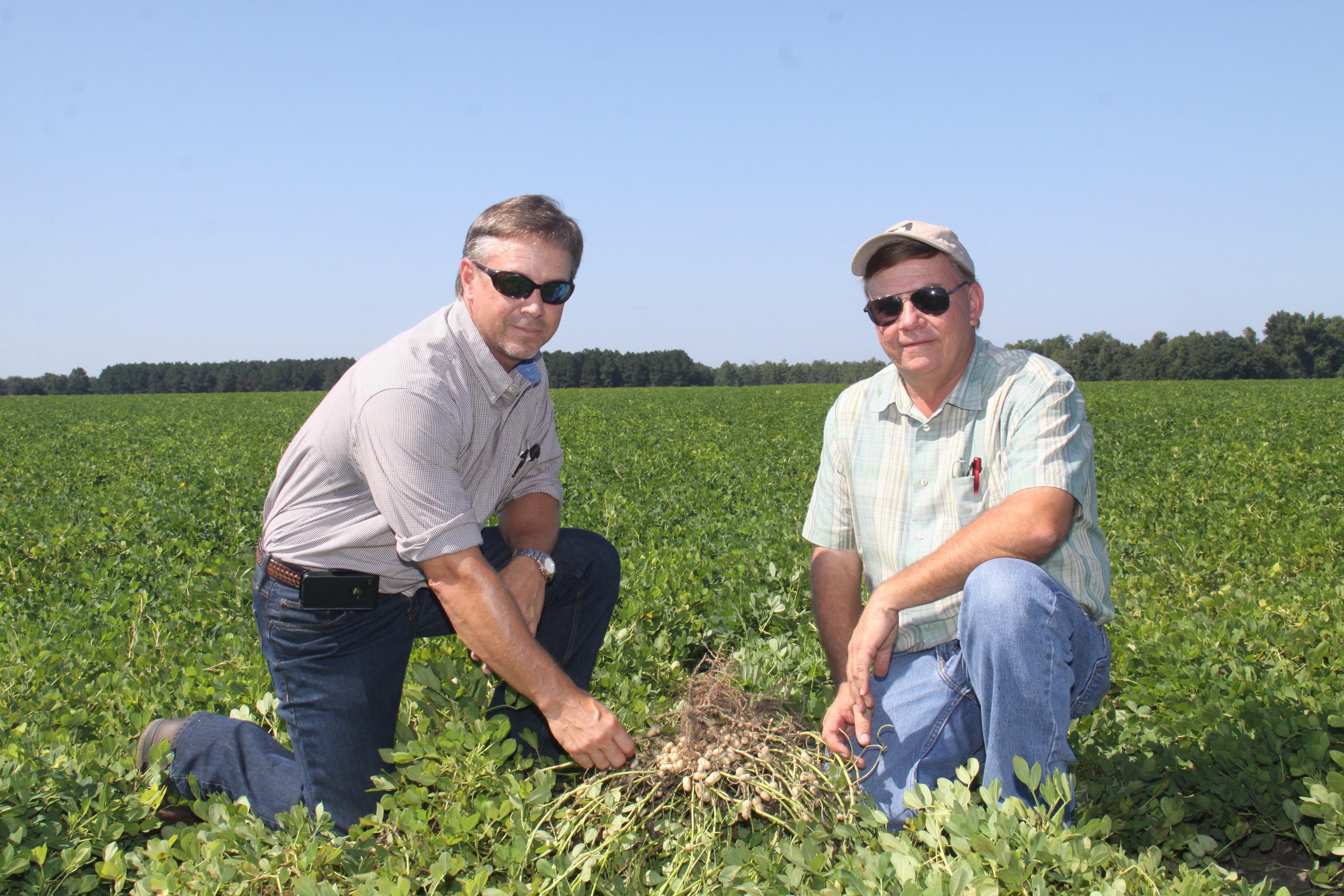
Charlie and Lee Cromley in their field of Georgia 09B high oleic peanuts in Brooklet, Ga.

Georgia Peanut Tour attendees visited the farm of Lee and Charlie Cromley in Brooklet, Georgia. Brooklet is a small town but it is known for the town’s annual peanut festival held in August. The event draws thousands of tourists each year to the small town. Visit the Brooklet Peanut Festival website to learn more about the event.

The Cromley’s farm just outside of town and grow 2,200 acres of cotton and 400 acres of peanuts. In the 300 acre field the tour group visited, the Cromley’s had planted the Georgia 06G and Georgia 09B varieties. The peanuts were planted the first week of May. The field has been very dry in August but over the last 10 days they have had 8-inches of rain which is preventing them from being able to get in the field and dig the peanuts. They are very innovative and on the cutting edge and they are looking for things to do better to improve yield.

The Georgia 09B is a high oleic variety where farmers are paid premiums to plant from several candy manufacturers that want more high oleic peanuts grown. However, less than 10 percent of the peanuts grown in Georgia are high oleic. One of the advantages of high oleic peanuts is the longer shelf life.

Lee Cromley says, is seems like more farmers should be growing a high oleic variety since it has several advantages. However, he says they have struggled with yield on the high oleic peanuts. “We planted another high oleic variety, Georgia 02C, a few years ago and that is a tough variety to manage from growth and maturity standpoint.” Cromley says. “Now, we have more varieties that are easier to manage and the yield is getting better. Even though yield drag is still 400 to 500 lbs. behind other non-high oleic peanuts. However, with the premium paid we feel like we will be fine with the reduced yield.”

Several companies like Hershey’s would like high oleic peanuts. However, it all comes down to the economics for growers.

“The market place is not built yet to accept high oleic and a grower wants to grow what yields and pays him back,” says Scott Monfort, University of Georgia peanut agronomist. “If everyone adopts high oleic peanuts right now then there would not be a premium offered and the premium is offered to offset the yield loss of those varieties. Without the premium that would negate the reason to grow high oleic peanut varieties today with reduced yield. We need to work on producing high oleic varieties that have the yield potential of Georgia 06G.”

View the 2014 Georgia Peanut Tour Photo Album.

Sikes conducts on-farm research to control thrips

2014_gpt_051s

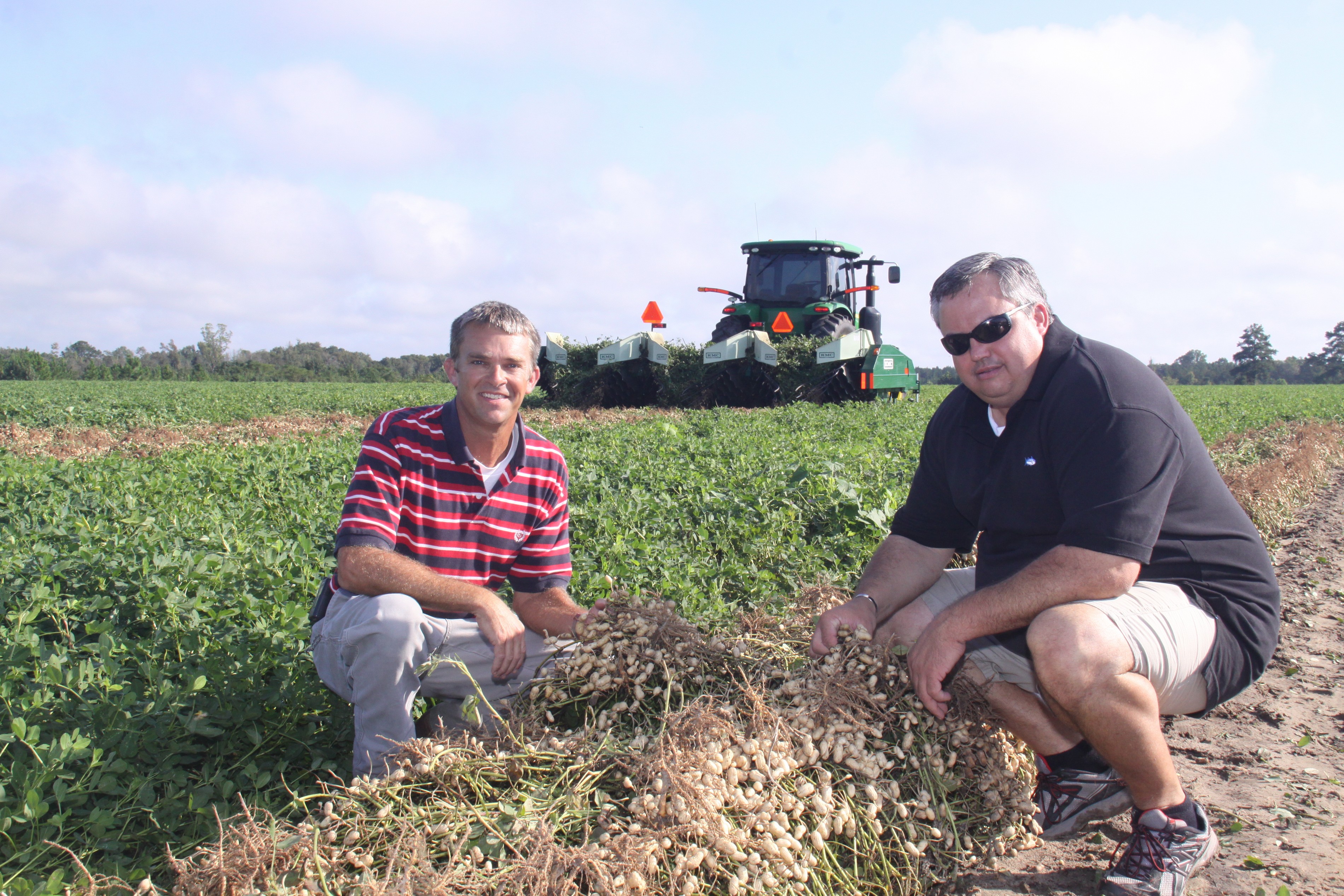
Pictured left to right: Bill Tyson, Bulloch County Extension agent, and Greg Sikes, farmer from Brooklet, Georgia.

The first field visit on the Georgia Peanut Tour is the farm of Greg Sikes in Bulloch County, Georgia. Sikes has been farming 16 years and grows 7,000 acres of cotton, peanuts, corn and soybeans. His grandfather and uncle farmed but Sikes has not farmed any of that land until two years ago. Sikes is a very innovative farmer, says Bill Tyson, Bulloch County Extension agent.

In 2014, Sikes planted Georgia 06G in a twin and single rows. The research tests use Thimet in-furrow on single rows and Imidacloprid in-furrow on twin rows to help with control of thrips. According to Sikes, planting in twin rows uses more expensive equipment but the twin rows help with controlling thrips and weeds. The peanuts were planted April 28 and the conditions at that time were pretty good. The peanuts have had a pretty good growing season as you can tell by the vines, Sikes says, except for a few weeks ago when the heat index reached 100 to 105 degrees every day.

According to Tyson, Sikes peanuts are ready to dig and normally he would be in the field digging but over the past week he has had about 8 inches of rain in this area. So, now we are looking for some sunshine. Tyson says, the tour should have come through this area about five weeks ago when farmers really needed rain and brought rain to us then. The peanuts are ready to be dug but we have to deal with what Mother Nature has given us.

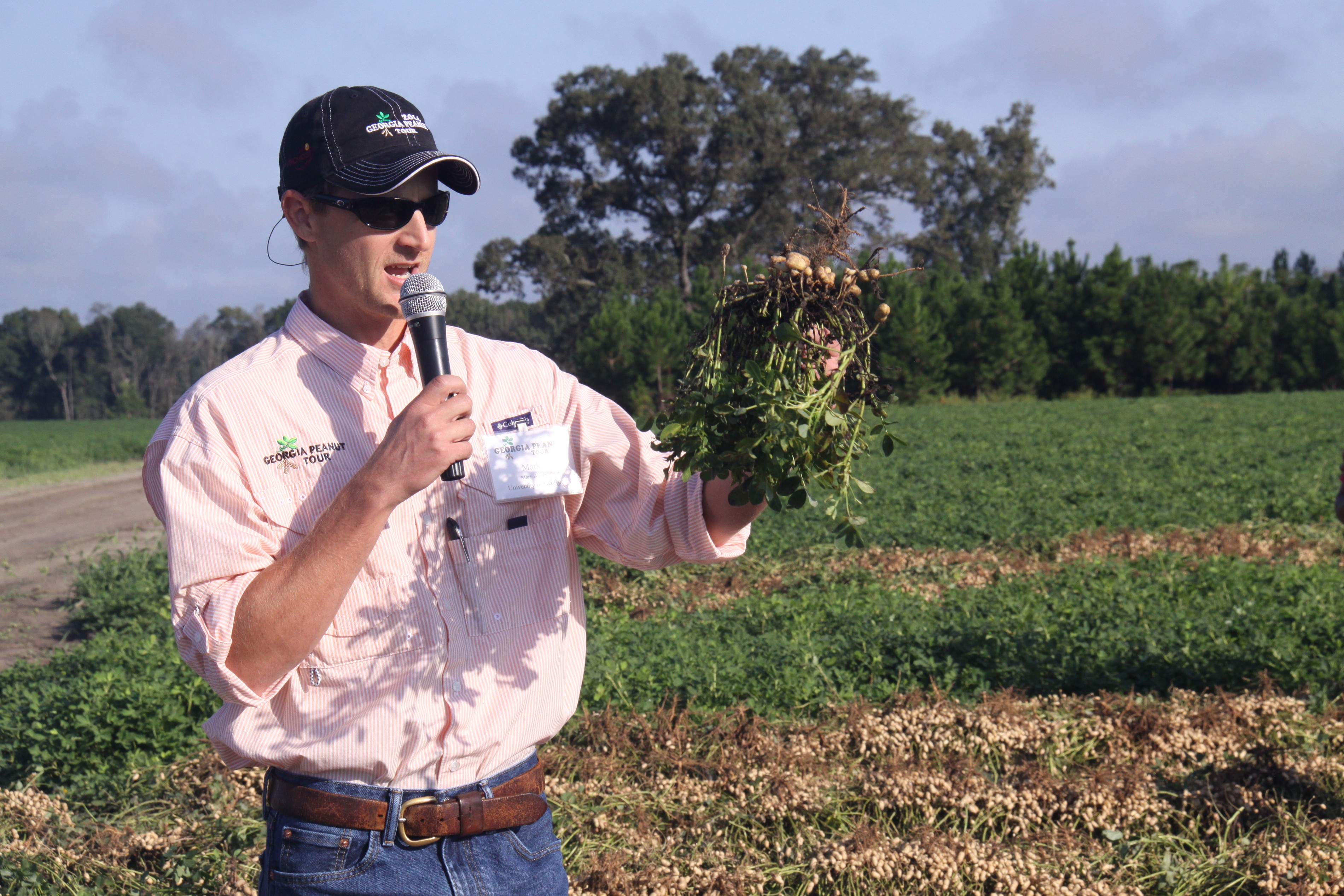
2014_gpt_047sMark Abney, peanut entomologist at University of Georgia also visited with attendees during the tour about insect pressure especially Thrips. Thrips are a tiny little insect that affects peanuts and causes tomato spotted wilt virus. The TSWV would have devastated the peanut crop across the Southeast but many plant breeders developed TSVW resistant varieties. Thrips is the only way TSWV is spread. Thrips also suck on plant juices and stunt the plant the first four weeks of the plants life at the beginning of the season. For many years, farmers used Timek to control peanuts but EPA banned the product a few years ago.  So, now the industry is forced to figure out a new way to control thrips. Our goal is to help the grower and increase efficiency by making one trip through the field by applying insecticide at planting. We are not 100% in finding a solution but we are working towards that to help farmers.

View 2014 Georgia Peanut Tour Photo Album

Helping Others through the Peanut & Mycotoxin Innovation Lab

A special focus of the Hot Topics Seminar featured the Peanut & Mycotoxin Innovation Lab (PMIL) by James Rhoads, assistant director. The PMIL applies innovative science to improve peanut production and use, raise awareness on nutrition, and increase food safety in developing countries. Today there are 925 million people who suffer from chronic hunger and demand for food is projected to increase by 50 percent over the next 20 years. The response from the USAID is “Feed the Future” which includes food security innovation centers like PMIL through the legume productivity. You may wonder, “Why Peanuts?” Peanuts are highly nutritious, valuable as a legume in cereal systems, often a woman’s crop and drought tolerant. There are several components of PMIL’s research portfolio including improved peanut varieties, mycotoxin management, seed production, post-harvest handling and processing and market opportunities. Additional information on the components of PMIL is available in additional blog posts regarding genomics with Peggy Ozias-Akins and technologies with Bob Kemerait. Information is also available online at: http://pmil.caes.uga.edu.

View presentation: Feed the Future Innovation Lab for Collaborative Research on Peanut Productivity and Mycotoxin Control
View presentation: PMIL Efforts in Peanut Value Chain Research: Lessons and Opportunities from Experience in Haiti

Video from Georgia Farm Monitor on the Peanut & Mycotoxin Innovation Lab.


2014 Crop Outlook

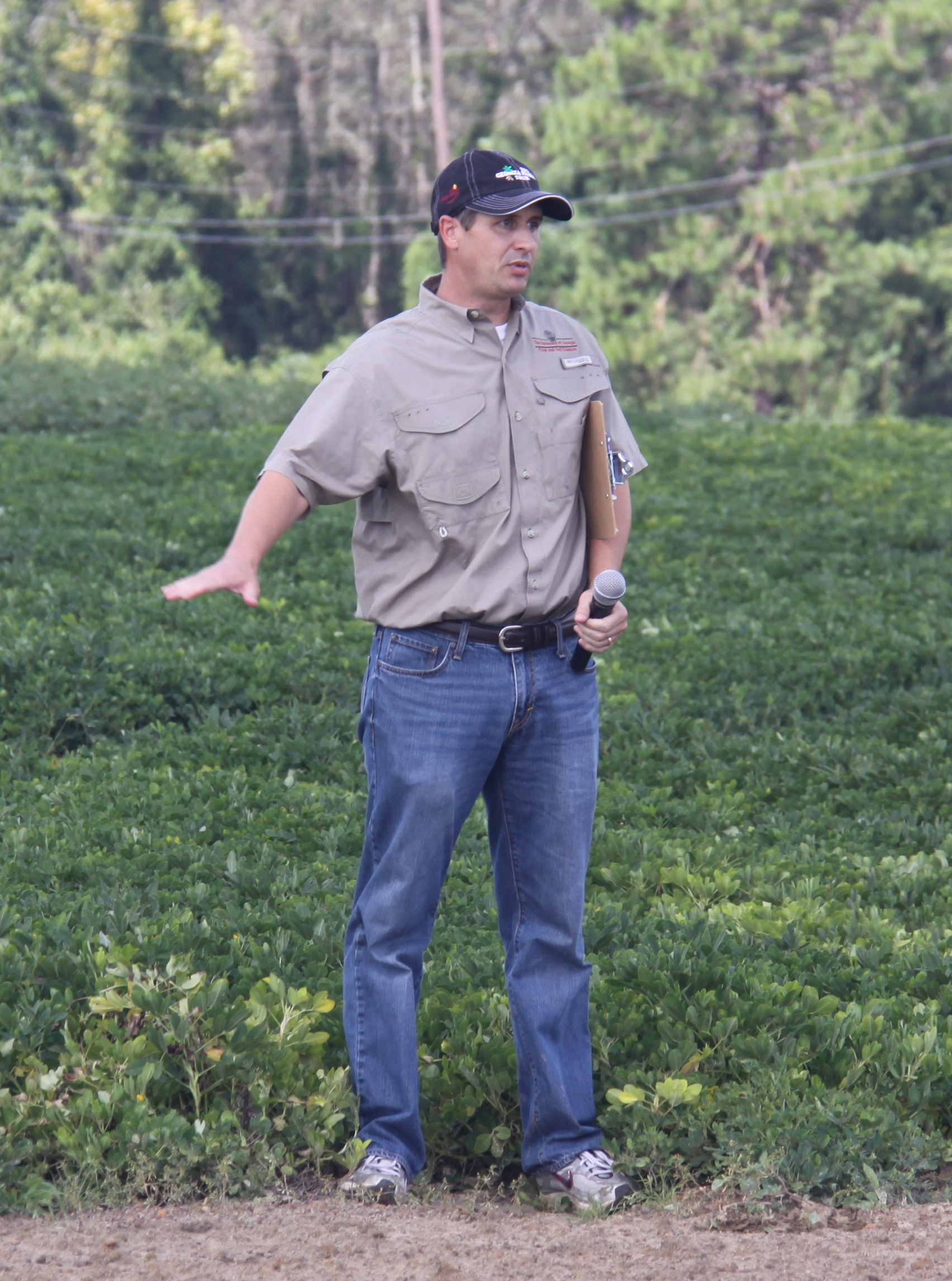
tubbsScott Tubbs, University of Georgia cropping systems agronomist, started his presentation by letting everyone know that it would take longer than 10 minutes for him to address all of the issues of the 2014 peanut crop. The update he provided gave everyone insight into the issues farmers have faced all season from delayed planting due to wet fields to weeks without rains during the critical water use time frame for peanuts. So, Tubbs took his 10 minutes and more to explain the 2014 crop.

At the beginning of planting time, large and consistent amounts of rain delayed land preparation for many farmers that needed to get ready to plant. However, planting stayed “on-time” or slightly ahead of average, he says, since some areas that received early rains in April did not receive as much rain in mid-May, and areas that received large amounts in mid-May did not have as much in late April.

Another issue farmers faced at planting time is soil temperature. Tubbs and other researchers at UGA, recommend planting peanuts after 4” deep soil temperatures are at least 68 degrees F. for three consecutive days. Soil temperatures were up to and above the 68 degrees target but near the end of April 18 temperatures dropped below 60 degrees. Some farmers started planting at the end of April but then another dip in temperature in May delayed planting. Farmers watching the weather forecast likely did not plant, says Tubbs, and some of those that did plant had poor emergence and plant stand issues.

However, on average, if you look at planting history we stayed ahead of the five-year average and ahead of the 2013 crop on planting, Tubbs says. As of May 18, 2014, 50 percent of the peanut plant was planted.

Water is critical during the first five weeks of peanut growth for pod fill and kernel development of early set pods, and for flower initiation and pegging of later peanuts. From weeks 10 to 15, anywhere from 1.5 to 2.1 inches of water per week is needed to sustain maximum growth potential. In July and August, average rainfall in the Southwest corner of the state was around 6 inches for the two months combined, while the crop need is closer to 14-15 inches during that timeframe. Some areas received less than 2 inches of rainfall during that span.

About 50 percent of the peanut crop in Georgia is non-irrigated which has caused some issues with the 2014 crop since those farmers have to rely on rainfall. In some areas farmers had issues with inverted seedlings growing upside, a phenomenon of geotropism. The peanuts were growing toward warmer temperature, which ended up being the soil below the peanut rather than the ambient air temperature above the ground. This was observed for a several day period in some areas in early- to mid-May, but was not widespread and corrected itself aside from a few select plantings trying to emerge in that period.

Farmers have also had issues with two-spotted spider mites and lesser cornstalk borers which eat on the stems and kernels and causes aflatoxin. This usually occurs in the non-irrigated peanuts so Tubbs recommends to growers to keep dryland peanuts and irrigated peanuts separate when harvesting the crop. Farmers have also faced some disease issues with white mold, aspergillus crown rot and tomato spotted wilt virus.

In September many farmers have received some rain but it may be a little too late, Tubbs says. He explains that any flowering or pegging peanuts at this time do not have enough time to mature, so recent rains may help finish off the set crop and advance grade, but will not help yield much except in very late planted peanuts or plants that have a lot of small swelling pods. So, the bottom line is a mixed crop outlook throughout Georgia for peanuts.

Welcome from Tour Chairman

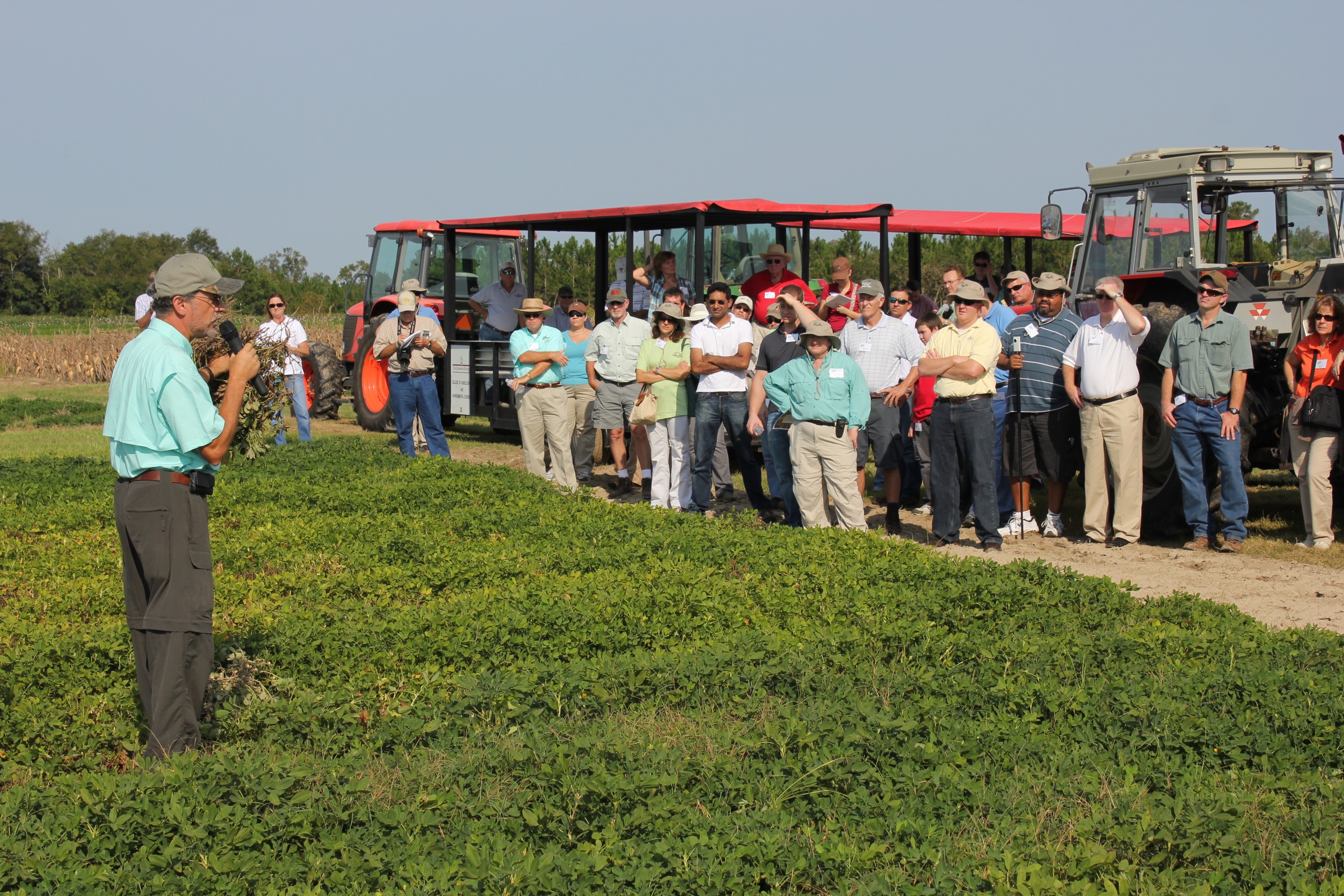
Bob Kemerait, Extension specialist with the University of Georgia (UGA) in plant pathology and chairman of the Georgia Peanut Tour is excited for the kick-off of the 28th Annual Peanut Tour in the East Georgia area. He is especially proud of Georgia’s peanut production and the growers who produce such excellent peanuts – the best in the world. The tour initially started to try to bring education of the peanut industry to the state of Georgia, which produces nearly half of all peanuts in the U.S. The tour is a great opportunity for anyone interested or associated with peanut industry to come and learn more about the industry in Georgia and receive an up close look at the industry. Attendees will be able to visit growers’ fields and learn more about the practices and management of pests, diseases and weeds. Participants will be able to see digging and harvest of peanuts while on the field visits. Attendees will also tour Birdsong Ogeechee Peanut Buying Point to learn more about the grading process. According to Kemerait, the tour group is also going to visit the Port of Savannah and learn more about the peanut export market. Research based information is critical for growers so tour attendees will be visiting the Southeast Georgia Research and Education Center in Midville. Individuals not able to attend the tour, can follow along at www.georgiapeanuttour.com.

Tour provides an overview of peanut production from the farm to processing

gapnuttourlogo2014wflatThe twenty-eighth annual Georgia Peanut Tour will be held Sept. 16-18, 2014, and centrally located out of the Savannah, Georgia area. The tour brings the latest information on peanuts while providing a first-hand view of industry infrastructure from production and handling to processing and utilization. Tour stops will be made in several peanut producing counties including Bulloch, Burke, Screven, Tattnall and Toombs. Attendees can expect to see first-hand nearly every aspect of peanut production in the state. This year’s tour hosts many exciting stops including on-farm field visits, the Port of Savannah, Birdsong Ogeechee Peanut Buying Point in Brooklet, the University of Georgia Southeast Research and Education Center in Midville and Vidalia Valley.

One special interest of the tour has always been the Hot Topics on Peanuts Seminar which will be held Tuesday, Sept. 16, at 3 p.m. This year’s seminar, held at the Holiday Inn & Suite in Pooler, Georgia, will include speakers providing an update on the 2014 Georgia peanut crop, peanut policy and market updates, and a special focus on the Peanut and Mycotoxin Innovation Lab.

The Georgia Peanut Tour is coordinated by the Georgia Peanut Commission, the University of Georgia- Griffin and Tifton Campuses, Southwest Georgia Research & Education Center, Attapulgus Research & Education Center and the USDA/ARS National Peanut Research Lab. The Georgia Peanut Tour blog will cover all aspects of the tour so those not attending may follow along at www.georgiapeanuttour.com.

2014 Tour Schedule
Day One Tour Map & Driving Directions
Day Two Tour Map & Driving Directions

2014 Georgia Peanut Tour set for Savannah area

We welcome your participation and encourage you to join us for the 28th Annual Georgia Peanut Tour to be held September 16-18, 2014. The tour will begin with the optional “Hot Topics” seminar on Tuesday, September 16, at 3:00 p.m. at the Holiday Inn & Suites in Pooler, Georgia. This seminar will highlight the current status of peanut production in Georgia, peanut policy and market update, a special focus on the Peanut and Mycotoxin Innovation Lab, and more. The tour will officially kick-off with an orientation on Wednesday, September 17, at 7:30 a.m. at the Holiday Inn & Suites. The caravan will pull out from the hotel promptly at 8:00 a.m. directly following orientation. Throughout the two days of touring, participants will have the opportunity to visit peanut growers’ fields, tour a peanut buying point, hear some of the world-class research being done in peanuts, tour the Savannah Port, and much more!

Registration for the Georgia Peanut Tour is now closed. If you have questions, contact Hannah Jones at 229-386-3470.
View Tour Schedule
View Sponsorship Packet

2013 Georgia Peanut Tour set for Sept. 17-19 in Valdosta, Ga.

2011_gpt_101sThe 27th annual Georgia Peanut Tour will be held Sept.18-19, 2013, and centrally located out of Valdosta, Ga., at the Fairfield Inn & Suites. The tour begins at 8 a.m. Wednesday, Sept. 18, and will end on Thursday, Sept. 19, at approximately 9:30 p.m. Tour stops will be made in several peanut-producing counties including Brooks, Lowndes and Lee Co., Fla. Attendees can expect to see first-hand many aspects of peanut production in the state of Georgia throughout the tour. This year’s tour is a host to many interesting and educational stops including on-farm harvest demonstrations, local crop consultant news updates and several special highlights including: Birdsong Peanuts in Lee, Fla.; Kelley Manufacturing Co. in Tifton; R.L. Cunningham & Sons in Quitman; and DuPont Crop Protection in Valdosta. Other stops will include the Georgia Department of Agriculture lab and Federal-State Inspection Service offices, both in Tifton, as well as research stops at the University of Georgia Tifton Campus’ Gibbs Farm and the Darrell Williams Research Farm at the Sunbelt Agricultural Expo grounds in Moultrie.

Another highlight of the tour will include an Early Bird “Hot Topics” Seminar on Tuesday, Sept. 17, beginning at 3 p.m. The “Hot Topics” Seminar, also held at the Fairfield Inn & Suites, will feature topics on the economic sustainability of U.S. peanut farms, global and U.S. peanut markets and opportunities, as well as a current crop update.

The Georgia Peanut Tour is coordinated by the Georgia Peanut Commission, the University of Georgia Griffin and Tifton Campuses and the USDA/ARS National Peanut Research Lab.

Register by visiting www.gapeanuts.com or for more information, email dana@gapeanuts.com.