Digging Deeper: Peanut Research at Midville

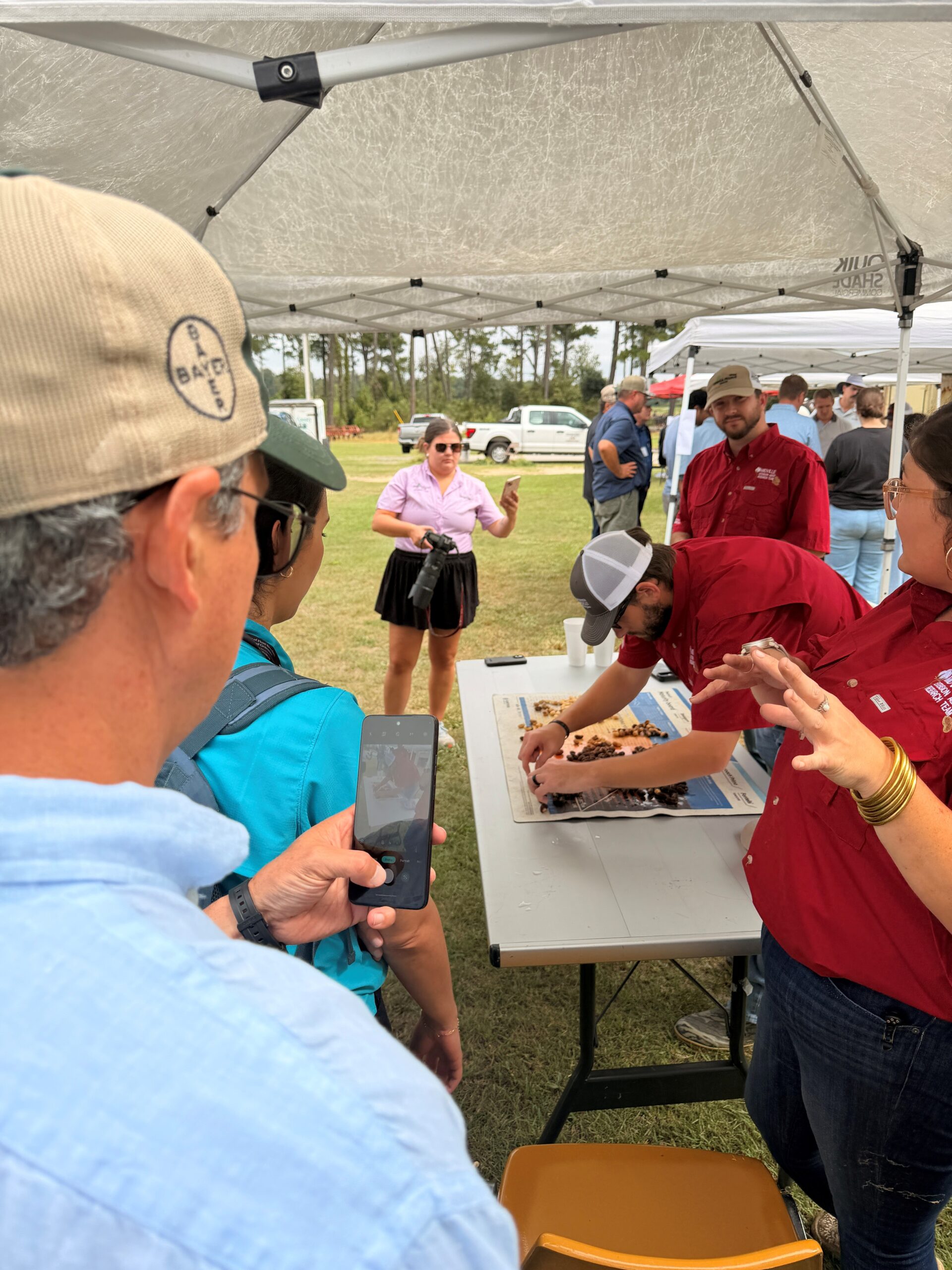
Attendees had the opportunity to learn about research at Midville on a variety of topics, including the wild peanut lab, peanut breeding, pod blasting and the maturity board. University of Georgia peanut breeder Nino Brown spoke with attendees about the research being conducted at Midville and its importance to peanut production.

The wild peanut lab gave attendees an opportunity to learn about the role of wild peanut species in peanut research. Wild peanuts can provide researchers with genetic traits that may be useful in developing new peanut varieties and improving characteristics of cultivated peanuts.

The peanut breeding program focuses on developing new varieties that meet the needs of growers and the peanut industry. Brown discussed how researchers evaluate traits such as yield, grade, disease resistance and agronomic characteristics. New varieties are tested at multiple research locations across Georgia, including Midville, to evaluate how they perform in different growing environments.

Pod blasting allows researchers to examine peanut pods and kernels to better understand their development. By removing the outer layer of the pod, researchers can observe the kernels and use that information when evaluating peanut maturity.

The maturity board is used to help determine the maturity of peanuts by organizing and evaluating pods based on their development.  Extension agents explained how examining maturity can help growers and researchers determine when peanuts are ready to be dug and better understand the maturity of the crop.
View the 2026 Georgia Peanut Photo Album.

A Look at Georgia’s 2026 Peanut Crop

During the 2026 Georgia Peanut Tour, Dr. Scott Monfort, University of Georgia Extension Peanut Agronomist, provided an update on this year’s peanut crop and the challenges growers have faced throughout the growing season. 

Georgia planted approximately 670,000 acres of peanuts in 2026, down from about 930,000 acres in 2025. Monfort explained that acreage decisions were influenced by cotton prices, weather conditions, and uncertainty leading to planting. The season began with a dry winter and spring, followed by sporadic rainfall that created significant differences between fields across the state. 

Wet conditions later caused planting delays and replanting in some areas, pushing a large portion of the crop into late May and June. The delayed planting created additional concerns as growers worked to provide the crop with enough time and heat units to reach maturity. 

As the season progressed, growers continued to manage drought stress, insect pressure, and leaf spot disease. Dryland fields were particularly affected by inconsistent rainfall, while irrigation helped maintain crop conditions in other areas. Despite the challenges, Monfort reported that approximately 59% of the crop was considered good to excellent, with some irrigated fields producing yields between 5,500 and 6,500 pounds per acre. 

Harvest is now underway, and growers are carefully monitoring peanut maturity to determine the right time to dig. While the 2026 crop is expected to be somewhat below recent averages, Monfort noted that Georgia is still producing a substantial crop with the potential for good overall quality.

View the 2026 Georgia Peanut Tour Photo Album

Navigating Policy, Prices and the Farm Safety Net

Amanda Smith provided an update on government policy and the Farm Bill, highlighting the challenges facing farmers and the importance of a strong agricultural safety net. She explained that the Farm Bill is a lengthy process involving both the House and Senate, with lawmakers working through committees before reaching agreements and ultimately sending legislation to the President. 

Smith noted that while progress has been made on a new Farm Bill, several areas still require attention, including nutrition, conservation, trade, rural development, research, energy and specialty crops. With the existing 2018 Farm Bill approaching its expiration, she explained that an extension may be necessary while lawmakers continue working toward a broader agreement. 

A major focus of Smith’s presentation was why agricultural policy matters to farmers. Rising input costs, changing commodity prices, weather, pests and other factors can create significant financial uncertainty for producers. She highlighted the growing gap between production costs and commodity prices, which has contributed to increasingly tight margins for farmers. 

For peanut producers in Georgia and Alabama, these challenges make the Farm Bill’s safety-net programs particularly important. Smith discussed programs such as Price Loss Coverage (PLC), Agricultural Risk Coverage (ARC) and crop insurance, which are designed to help producers manage financial risks when prices or revenues decline. 

Smith also highlighted recent changes to commodity programs and crop insurance that are expected to provide additional support to producers. Ultimately, she emphasized that government policy plays an important role in helping farmers navigate unpredictable markets and maintain the long-term sustainability of American agriculture.

View the 2026 Georgia Peanut Tour Photo Album

A Story Worth Telling: The Future of Georgia Peanuts

Speaking at the Georgia Peanut Tour in Savannah, Georgia, Taylor Arnold, Executive Director of the Georgia Peanut Commission, highlighted the importance of research, innovation and growing demand for peanuts. 

Arnold explained that the Georgia Peanut Commission invests heavily in research to help farmers improve efficiency, increase yields, manage pests and diseases, use resources such as water more effectively, and support the long-term sustainability of peanut farming. He also emphasized the need to look beyond traditional peanut markets and explore new uses that can create additional demand. 

A major focus of Arnold’s presentation was changing the way consumers view peanuts. While peanuts are often associated with peanut butter, snacks and ballgames, Arnold pointed to their nutritional value, affordability and versatility. He discussed opportunities ranging from premium food products and protein-focused foods to animal feed, industrial applications and fuel. 

Arnold also highlighted the sustainability story behind peanuts, including their relatively low water requirements and the many uses for the peanut plant, vines and shells. 

Another important topic was peanut allergies. Arnold discussed research supporting the early introduction of peanuts and the potential for changing perceptions and creating new opportunities for peanuts in schools and institutional food programs. 

Throughout his presentation, Arnold returned to one central message: the peanut industry has a story to tell. By sharing the nutritional, sustainable and economic benefits of peanuts while exploring new markets and applications, the industry can help increase demand and create new opportunities for Georgia peanut growers. 

View the 2026 Georgia Peanut Tour Photo Album

Water Management in Georgia: EPD Updates and Key Takeaways

UGA Extension specialist Wes Porter provided an update on the Georgia Environmental Protection Division (EPD), focusing on drought response, agricultural water withdrawal permits, regional water planning and coastal water management. 

Porter reviewed Georgia’s drought response system and the conditions that EPD monitors, including precipitation, stream flows, groundwater levels, reservoir levels, soil moisture and water supply conditions. Georgia reached a Level 1 drought response in April 2026 and, while recent rainfall has provided some relief, several areas of southwest Georgia continue to experience low stream flows and groundwater concerns. 

A major focus was the agricultural water withdrawal permitting program. Georgia currently has more than 27,000 agricultural water withdrawal permits, with permits generally required for withdrawals exceeding 70 gallons per minute or 100,000 gallons per day. Porter also discussed recent changes affecting the Flint River Basin suspension area, including new opportunities for certain permits and different options for unrestricted, drought-restricted and volumetric-limited permits. 

Porter emphasized the importance of maintaining compliance and encouraged producers with questions or permits that may be out of compliance to contact UGA Extension or EPD. He also highlighted the state’s agricultural water metering program and noted that the state is responsible for maintaining permitted water meters. 

The presentation concluded with updates on regional water planning and groundwater management in southeast Georgia, including efforts to protect the Floridan aquifer and reduce the risk of saltwater intrusion near the Savannah area.

View the 2026 Georgia Peanut Tour Photo Album

Weather, Climate, and the Future of Georgia Agriculture

Pam Knox of the University of Georgia discussed the differences between weather and climate and how both affect agriculture. Weather focuses on short-term conditions such as temperature, rainfall, frost, and storms, while climate looks at longer-term patterns that influence farming decisions. 

Knox highlighted the role of climate variability, including El Niño and La Niña, in shaping seasonal conditions across the Southeast. She also explained that Georgia has experienced significant warming since about 1970. While precipitation has not changed as dramatically, rainfall patterns are becoming more variable, with heavier rain events and longer dry periods. 

These changes can create challenges for Georgia farmers, including drought, erosion, heat stress, pests, diseases, and increased water needs. At the same time, longer growing seasons may provide opportunities for double cropping and other production changes. 

Knox emphasized that understanding climate trends can help farmers prepare for the future. Producers can use climate information to make better decisions about planting dates, crop selection, irrigation, pest management, and protecting livestock and outdoor workers from extreme heat. Planning ahead will be important for maintaining productive and resilient farms as Georgia’s climate continues to change. 

View the 2026 Georgia Peanut Tour Photo Album

Managing Irrigation for Georgia’s Peanut Crop

Wes Porter of the University of Georgia discussed the importance of irrigation management and water conservation during the Georgia Peanut Tour, emphasizing how critical efficient water use is to Georgia’s peanut industry. 

Porter highlighted Georgia’s extensive irrigation infrastructure, with approximately 1.4 million irrigated acres and nearly 27,000 center pivots across the state. With that level of irrigation, he stressed the importance of using water efficiently and making informed decisions about when and how much to irrigate. 

Porter encouraged growers to move beyond waiting for visible crop stress before irrigating. He outlined several tools available to producers, including checkbook methods, smartphone apps, computer models and soil moisture sensors. Newer technologies are also combining soil moisture data with crop-growth models and artificial intelligence. 

For peanuts, finding the right balance is especially important. Under-irrigation can reduce yields, while over-irrigation can waste water and money and lead to excessive vegetative growth rather than productive growth. 

Cost is another major consideration, particularly with diesel-powered irrigation systems. Porter noted that irrigation can represent a significant production expense, making efficient management increasingly important. 

He also discussed the dry conditions leading into the 2026 growing season. Much of Georgia entered planting season with below-average water levels, creating additional challenges for growers. 

For peanut growers, the goal is finding the right balance: providing the crop with the water it needs without over-irrigating or adding unnecessary costs.

View the 2026 Georgia Peanut Tour Photo Album

Welcome to the 2026 Georgia Peanut Tour

We would like to welcome you to the 2026 Georgia Peanut Tour. Whether this is your first time joining us or you are a “Peanut Tour Veteran,” we are very happy to host you on our 38th tour. As in previous years, you will be immersed in the production of one of Georgia’s most important agricultural crops. We hope this experience gives you greater insight into the challenges our farmers face, as well as the many reasons we proudly say that the world’s best peanuts are produced in Georgia. On this year’s tour you will be see peanut production from A to Z. It is our hope that you will come away with a great understanding and appreciation of the legacy, hard work, and dedication that go into peanut production in our state. Those engaged in the peanut industry, including farmers, buyers, processors, researchers, Extension personnel, and representatives of the Georgia Peanut Commission, are proud that Georgia is the leading peanut-producing state in the United States, and we are excited to share this year’s crop with you.

The 2026 Georgia Peanut Tour is staged in the south-east region of our state’s production area and begins on the afternoon of Tuesday, September 22, with a “Hot Topics” symposium. Expert speakers will provide updates on the status of this year’s peanut crop, with a special focus on enhancing the resilience of the peanut industry.

The next two days of the tour will provide opportunities to learn more about peanut production, research, processing and more. Field visits will give you a glimpse of peanut production, digging, and harvest. You will also learn about the important role research plays in the peanut industry, from improving crop production in Georgia to managing pests and addressing other challenges facing growers. The tour will also take you through several important parts of the peanut industry and production chain, including stops at the Ports of Savannah, the Southeast Research and Education Center, Mana Nutrition and other locations.

Again, on behalf of the Peanut Tour Committee, with members from the USDA-ARS Peanut Lab, the Georgia Peanut Commission, and the University of Georgia, I warmly welcome you to the 38th Georgia Peanut Tour! We hope that over the next few days you will better appreciate the complexity of the peanut industry in Georgia and the personal commitments from all involved in producing the world’s finest peanuts! We hope our events will allow for fellowship and that you enjoy Georgia’s hospitality exploring a beautiful, rural part of our state. We offer our sincere thanks to all the sponsors, who through their generosity, help make this tour possible. Please do not hesitate to let us know how we can help you as we travel the highways and byways of our state’s production area. We are proud of our peanut farmers and our peanut industry, and we are happy that we can share them with you.

View the 2026 Georgia Peanut Tour Photo Album


2026 Georgia Peanut Tour set for Savannah area

The thirty-eight annual Georgia Peanut Tour will be held Sept. 22-24, 2026, in Savannah, Georgia, and the surrounding area. The tour brings the latest information on peanuts while giving a first-hand view of industry infrastructure from production and handling to processing and utilization. Tour stops will be made in several peanut producing counties in South Georgia.

Attendees can expect to see first-hand nearly every aspect of peanut production in the state. This year’s tour hosts many exciting stops including on-farm harvest demonstrations and clinics, research at the University of Georgia Southeast Research and Education Center, Georgia Ports Authority and MANA Nutrition.

The tour kicks off this year with the Hot Topics Seminar on Sept. 22 at 2:30 p.m. at The Clyde Venue in Savannah, Georgia. The seminar topics include an update on the 2026 Georgia peanut crop and a special focus on production challenges, enhancing production and climate issues with emphasis on irrigation, fertilizer and other inputs.

For attendees flying, the closest airport is the Savannah/Hilton Head International Airport in Savannah, Georgia. Hotel accommodations can be made at the host hotels, Embassy Suites Savannah Historic District or the Hampton Inn & Suites Savannah Historic District in Savannah, Georgia, by calling 800-548-8690 and mention the code 90P for Embassy Suites and 90W for Hampton Inn. Reservations can also be made online. The room block’s deadline is Aug. 7, 2026.

For specific tour info or details, contact David West at 229-386-3470.

The Georgia Peanut Commission, University of Georgia College of Agricultural and Environmental Sciences and the USDA-ARS National Peanut Laboratory coordinate the tour.

Register online  (Online Registration Now Closed)
Print Registration Form
Download Tour Schedule
Driving Directions & Maps – Wednesday
(Thursday map not available since everyone will be riding the buses)
Download Sponsorship Packet